 |
Business-Managed Democracy » Education » Commercialism » Promotions » Incentive Schemes |

 Motivational and incentive schemes are effective at associating brand names with school success – a first step in creating loyal customers – and encouraging the child to see the company as satisfying their needs.
Motivational schemes which offer meals not only give the child “an opportunity to increase restaurant visits by potential customers” but usually involve the whole family accompanying the child when they go to collect their prize and having to buy meals for the rest of the family.
Moreover, instead of teaching children the joy of reading motivational schemes bribe children to read and there is the danger that they will read shorter, easier books to reach their goal of free fast food earlier: “Instead of an interest in reading the activity promotes an interest in pizza.”
|
Dunkin’ Donuts gives coupons for US 3rd and 4th grade teachers to give out to students who consistently do their homework, which entitle the children to two free donuts. 
Reference: Eve Lazarus, ‘Cafeteria Blues’, Marketing Magazine, 19 January 2004.
Krispy Kreme doughnuts have a Good Grades program that promises elementary children in Canada a free doughnut with every A grade they get.
Reference: Alex Molnar, School Commercialism: From Democratic Ideal to Market Commodity, New York, Routledge, 2005, p. 51.
Papa John’s Pizza’s Winners Circle awards children with free food for good grades.
Reference: ‘About Book It!’ Pizza Hutt, 2007
Reference: Jane Levine, ‘Junk-Food Marketing Goes Elementary’, The Education Digest, vol 65, no 5 2000; Lisa Roner, ‘McDonald's - Reading, Writing and Junk Food Advertising’, Ethical Corporation, 18 February, 2008.
McDonald’s McSpellIt Club offers incentives for good spelling in the US. In Florida, McDonald’s offers Happy Meals to elementary school children who get high grades.
Reference: Julia Baird, ‘Mcschool: How Good Burghers Raise Funds’, Sydney Morning Herald, 1 August 2001.
Reference: Solomon Hughes, ‘Mclabour Exposed’, The Ecologist, March, 2004, p. 31
McDonald’s provides burger vouchers to schools to use as incentives for good behaviour in the UK. |

In an internal ‘Operations Manual” for local store managers in the 1990s, McDonalds noted:
Schools offer excellent opportunities. Not only are they a high traffic [sales] generator, but students are some of the best customers you could have. McDonald's have developed a number of programs that you can take into the schools in your area... Good relations with your local schools can also offer opportunities for crew recruitment.
The judge in the McLibel case subsequently ruled that McDonald’s “exploits children” with its marketing. However, as McDonald’s argued at the time, its marketing is not very different from other food companies.
If you have any examples or updates you would like to contribute please email them to me and I will add them here. Please give references for where you sourced the information.




 Pizza Hut’s ‘Book It’ program awards free pizzas as learning incentives for students in various countries to achieve reading goals. According to Pizza Hut, Book It involves 22 million school students in 900,000 classrooms. The program has even expanded to preschoolers – who have the books read to them.
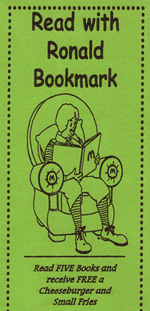
 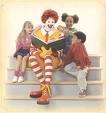 McDonald’s Reading with Ronald in Australia offers children a free meal when they have read five books. McDonald’s also offers achievement awards.
 Previous
 Next
Next