 |
Business-Managed Democracy »Environment » Global Warming » Introduction |
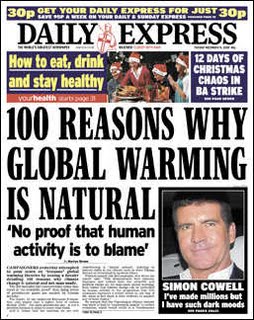
Politicians in the many nations such as the US and Australia have not been responsive to people's concerns about global warming because of the success of industry lobbying and public relations strategies. Initially vested interests cast doubt on the whole idea of human-induced global warming and funded scientists, politicians and think tanks willing to express this doubt. However as the evidence of global warming accumulated most 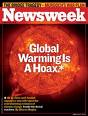 corporations admitted the veracity of global warming, at least publicly, as did the 'respectable' think tanks.

By 2000, "75 percent of Fortune 5000 executives believed global warming to be a serious problem". Nevertheless, the public statements of many corporations in support of the reality of global warming were often contradicted by other corporate activities, lobbying and expenditures.
Interestingly, no companies in our sample misrepresented climate science in their earnings calls, when executives talk to financial analysts about their companies' financial performance. Despite misrepresenting climate science in other venues during our time period of study, several companies expressed concern in their earnings calls about climate change or commitment to mitigation actions. This observation suggests that some companies tend to misrepresent climate science when they are speaking with policy makers or the public, but when it comes to their own corporate financial health they take climate change seriously.
Corporate funding continued for front groups, global warming-denying scientists and fringe think tanks that denied human-induced global warming. Nevertheless mainstream think tanks shifted their argument from denying global warming to claiming that it would not have such bad consequences and there was no reason to introduce draconian regulations to prevent it. They therefore continue to oppose greenhouse gas reduction treaties and legislation and exaggerate the costs of such measures.

 In 1998 national polls of Americans showed that "an overwhelming majority" believed that global warming was a serious problem that required government action, however in 1997 the Senate voted unanimously that it would not ratify any global warming treaty that would harm the economy or require mandatory greenhouse gas reductions that were not also required of developing nations. This disjuncture between public opinion and government action has been blamed on the political activities of advocacy groups, particularly corporate-funded think tanks.
Public support has also been eroded since 1997 as a result of the corporate-funded campaign to cast doubt on global warming science. In Britain, a February 2010 survey found that "Of the 75% of respondents who agreed that climate change was happening, one-in-three people felt that the potential consequences of living in a warming world had been exaggerated, up from one-in-five people in November" 2009.
Corporations and their lobby groups moved their efforts to delaying treaties and legislation and shaping those that were finally agreed and passed. In particular they sought to promote voluntary actions by presenting themselves as environmentally responsible and committed to finding solutions (see greenwash). Some corporations have also sought to promote technological solutions such as nuclear power and biofuels rather than regulatory solutions or more environmentally sound technologies such as renewable energy sources like solar and wind power.
Moreover coal and oil companies have promoted the idea that technological innovation will soon enable carbon to be captured and stored (see clean coal) so that fossil fuels can continue to be used and there is no need to phase out their use.
Where legislation and international agreements cannot be avoided, corporations favour market mechanisms such as emissions trading that would
A Kazakh translation of this page can be found at http://theworkscited.com/global-warming/




 Next
Next