 |
Business-Managed Democracy » Inner Circle » Social Networking » Bilderberg |
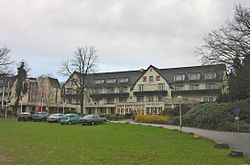 The Bilderberg conference is held each year at an expensive hotel in Europe or North America. It is named after the hotel in the Netherlands (pictured) where the first conference was held in 1954. The 120 or so people invited attend in a private rather than official capacity and the conference aims to enhance "mutual understanding".
According to BBC correspondent Emma Jane Kirby: Reference: Emma Jane Kirby, ‘Elite power brokers meet in secret’, BBC, 15 May 2003.
Bilderberg, which was founded in the 1950s by Prince Bernhard of the Netherlands, is said to steer international policy from behind closed doors. 
Reference: Mike Peters, ‘The Bilderberg Group and the project of European unification’, The Lobster, No, 32, 1996.
"It is essential that these discussions be kept out of the public sphere. The lengths to which the organisers go are quite astonishing. An entire hotel is taken over in advance (existing guests being moved out) and a whole caravanserai, including special catering staff and armed security guards, descend on the site several days in advance." |
|

It is attended by North American and European corporate leaders (from BP, Microsoft, Google, IBM, Shell, Unilever, Barclays), bankers, top politicians – including heads of state and royalty – and military leaders, and senior newsmedia (who are not there to report on the discussions). (List of those attending Bilderberg conferences)
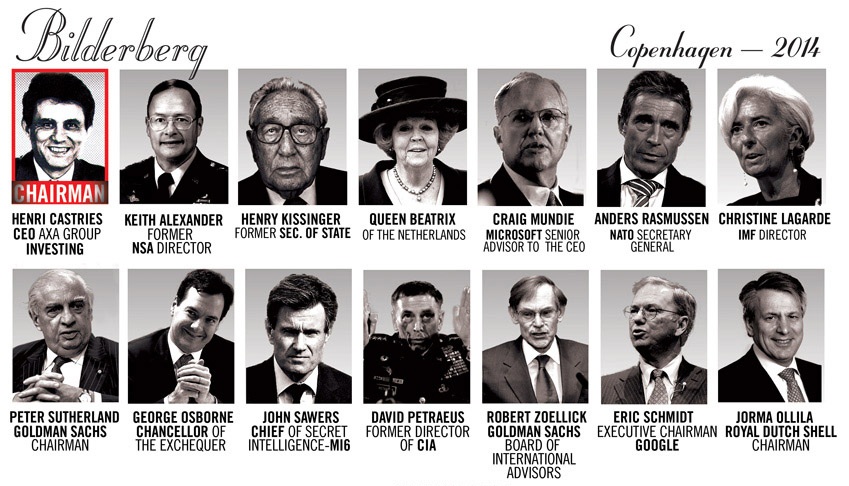
Bilderberg steering Committee members have included:
An analysis of the 1999 list of people attending Bilderberg found that those "from the U.S. are almost always members of the Council on Foreign Relations, and since 1973 Japanese elites have been brought into the fold through a third overlapping group, the Trilateral Commission".
The Bilderberg group describes its meetings as being unique for:
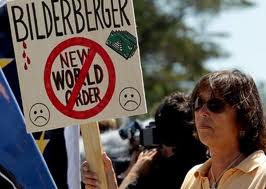 Future presidents and prime ministers have been invited including Bill Clinton (in 1991 - became president in 1993), Tony Blair (1993 - became Leader of Opposition in 1994 and PM in 1997), and various presidents of the European Union, all before they were elected to those positions. "This has led to accusations that the group pushes its favoured politicians into high office. But Viscount Davignon [head of Bilderberg] says his steering committee are simply excellent talent spotters... But its critics say Bilderberg's selection process gives an extra boost to aspiring politicians whose views are friendly to big business."



 Previous
 Next
Next