 |
Business-Managed Democracy » Education » Standardised Curricula » Content » Core Knowledge |

Business leaders focus on the need for core subject content and basic skills to be covered by schools to ensure that future employees can do their jobs well. In this way, “to be ‘educated’ is to have consumed the information necessary for the optimising of performance”.
The vice-president of MacMillan-Bloedel, argued that the Canadian high school curriculum should consist of just six subjects: English, maths, physics, chemistry, showing up for work and how to get along with others.
Milton Goldberg, Vice-President of the National Alliance of Business in the US, told a Senate Committee, that schools did not spend enough time on core academic instruction because they were so busy teaching non-core subjects like consumer affairs, conservation and energy and dealing with non-academic activities such as counselling, gym, homeroom and lunch. He argued the need to lengthen the school day but also to “reclaim the school day for academic instruction”, that is at least 5.5 hours of core instructional time daily.
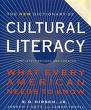 Teaching particular content has also become important. A book by E.D. Hirsch, now a distinguished visiting fellow at the conservative think tank, the Hoover Institute, entitled Cultural Literacy, was promoted by business during the 1980s. It argued that schools paid too much attention to students’ emotional and psychological well-being and not enough to teaching them basic knowledge.
Hirsch claimed that the idea of teaching children how to learn rather than teaching them particular content was creating children who were ignorant of essential cultural knowledge, which he referred to as “core knowledge”. This was knowledge of world history, geography and literature (great books).
In this case, core knowledge is that knowledge deemed by the political and business elite to be essential. For example in the UK, the National Curriculum emphasises “British history, British geography and ‘classic’ English literature”.
In the US the Bill and Melinda Gates Foundation has financed and coordinated a campaign to introduce national standards, Common Core, and some 45 states have adopted them.

If you have any examples or updates you would like to contribute please email them to me and I will add them here. Please give references for where you sourced the information.




 Previous
 Next
Next