 |
Business-Managed Democracy » Education » Standardised Curricula » Content |
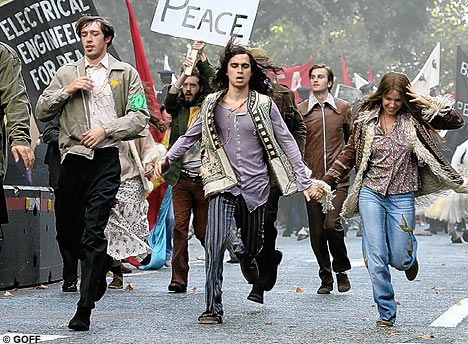 The promotion of academic rigour and a narrow, back-to-basics, curriculum by business was also a reaction to the broadening of the curriculum that occurred during the 1960s and 70s. During this time many young people subscribed to a counter culture movement that questioned central aspects of mainstream materialist culture, including its inegalitarian structure, business values and impacts on community and environment.

The movement influenced schools and brought a new emphasis on equity and critical thought that affected not only the content of classroom discussions but the methods used to teach. Educational experiments included “the open classroom, mixed ability teaching, non-graded assessment, negotiated curriculum, inquiry learning and education that was immediately relevant, accessible and contemporary”. Teachers encouraged debate about social institutions and current news topics.
Educational curricula in many nations began to include sex education, peace studies and feminist studies and to be inclusive of the concerns of indigenous people, immigrants, people of differing ethnic backgrounds, and the poor.
Subjects such as “film-making, peace education, drama, sociology or personal development” were introduced. These were considered irrelevant by business groups and undesirable as they promoted a “personal development and a liberal outlook” that were at odds with what employers required.
Narrowing curriculum has been a means of ideological control, a way of undermining alternative views of society and avoiding subjects that develop critical tendencies in future employees. “What business wants is an easily quantifiable set of skills that does not allow a young intellect to stray from a straight and narrow ‘three R’s’ training.”
If you have any examples or updates you would like to contribute please email them to me and I will add them here. Please give references for where you sourced the information.




 Previous
 Next
Next