 |
Business-Managed Democracy » Education » Schools as Businesses » Business Model » Management |

Successive UK governments developed various ways to get businesses involved in school management so as to inculcate schools with business culture and management styles. The National College for School Leadership (NCSL) was established to train school principals to be more like business managers:
The function of the NCSL is the ideological re-engineering of the culture of school management in order to secure not just the compliance of teachers with the government’s agenda but their commitment to it. The vehicle is a model of ‘transformation leadership’ imported from the world of business management.
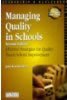


Books aimed at head-teachers had titles such as Marketing Education, Total Quality Management and the School, Human Resource Management in Education, The Income Generation Handbook and Managing Educational Property.
In these texts, headteachers are being encouraged to develop business plans and promotion strategies and apply business consultancy approaches. They are being taught how to use management techniques borrowed from commerce…

Efforts to instil corporate culture into US schools took the form of vision statements, “slogan buttons, and in-service day programs filled with overhead presentations” and “team-building” exercises.
 In New York City, Joel Klein was hired to run the schools. He had no experience as an educator and his previous job was as CEO of the transnational media company Bertelsmann. Klein hired private consultants to advise him and “installed a cabinet of mostly noneducators making six-figure salaries”.
Klein worked with the Bill & Melinda Gates Foundation, which donated $125 million to New York schools, to reform schools so as to bring “a CEO mentality to education… We’re converting the role of the principal into a CEO role…” Jack Welch, retired head of General Electric, was put on the board of an academy to train school managers – previously called principals.
Klein’s metaphors tell their own story. The chancellor sometimes refers to children as cars in a shop, a collection of malfunctions to be adjusted. Teachers need to ‘look under the hood,’ he says, to figure out the origins of the pings.
When he left the job he was appointed CEO of News Corporation's educational division, working for Rupert Murdoch.
In Australia, “bureaucrats with no experience in education, were hired as senior administrators by the education bureaucracy for their business credentials”. All educators were replaced as education departments heads throughout Australia by 1992.
The idea that education policy should be made by those with experience in education was replaced by the idea that policy should be set by politicians and implemented by educational managers appointed for their business skills and ability “to operate efficiently to achieve goals”.
At state level, old-style bureaucracy was jettisoned in favour of corporate management techniques transported from industry. Bureaucracies were stripped back into flatter, leaner and meaner organizations, where education workers are responsible for achieving goals set by their ‘line managers’, who are in turn striving to attain the outcomes determined by the line managers above them.
The new business-oriented managers in the education departments brought with them a new culture and the motivation for radical change. They viewed educational institutes and schools as “stand-alone corporations in a market, with their own products, clients, shareholders, revenues, shadow profits…”
UBS, a major transnational financial services company, which is one of many corporations that contributed $75 million to the Academy, paid for Joel Klein to visit Australia in November 2008 to promote his business-oriented school reforms. Australian federal education minister, Julia Gillard, who was impressed by Klein’s school ‘reforms’ on a visit to the US, is seeking to apply some of them to Australian schools.
If you have any examples or updates you would like to contribute please email them to me and I will add them here. Please give references for where you sourced the information.




 Previous
 Next
Next