 |
Business-Managed Democracy » Education » Schools as Businesses » Consequences » Toll on Children |

The high stakes attached to standardised testing has resulted in a push for students to begin academic studies at an earlier age as schools compete to outdo each other in the tests in the US. There are standardised tests in kindergarten in some states. In Alabama, kindergarten children are subjected to tests three times in a year. Children are even tested in pre-school programs for literacy and math, when they are only four years old.
"Kindergartners are working on letters and numbers at their desks in the way that first-graders used to do. Middle schoolers are enrolling in algebra courses a year or two earlier than was once the accepted practice… Everything is starting earlier and earlier in education."
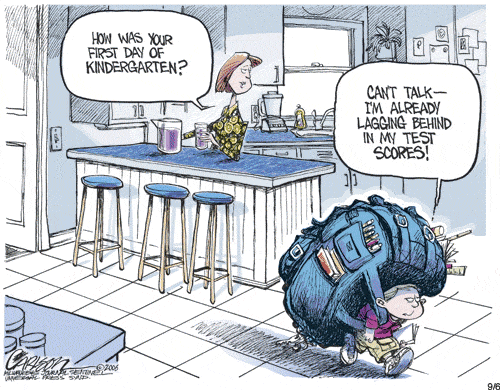
This trend has increased the number of students dropping out of school as they are unable to cope with the accelerated pace of learning.
Some states are requiring schools to retain elementary students if they do not pass a standardised reading test, despite evidence that children learn to read at different rates and start at different levels when they begin school. Consequently children who develop later get an inferiority complex early in life. Pre-school and kindergarten children are especially likely to be traumatised by tests and labelled as poor performers before they even begin school.
The increased intensity of academic schooling is also making school an unpleasant place for children, particularly as recesses are reduced or cut altogether so they get no opportunity to stretch or play or develop social skills. “The present emphasis on testing and test scores is sucking the soul out of the primary school experience for both teachers and children.”

 The State of the Kid 2009 Report found that the number one problem for US children was school work, including their performance in school tests.
Record numbers of children are depressed. Children get so stressed over the tests that some are vomiting on the morning of their tests. Parental opposition to high-stakes testing is growing.

William McKeith, principal of a Sydney school, notes that the culture of testing in NSW is causing children to lose the time they need to play, relax and “construct their own activities… Some of us can remember after school hours, fun times, filled with bicycle riding, dress-ups and cricket in the backyard with friends…. Many of our children are now either too tired or too busy for such innocent activities. It isn’t surprising that increasingly we are hearing doctors and psychologists report concerns with childhood stress, anxiety, poor sleep and obesity”.
A University of Melbourne survey of 8353 teachers and principals in 2012 found that 90 percent of children "felt stressed before NAPLAN tests, with symptoms including crying, sleeplessness, vomiting and absenteeism".
Nor have years of standardised testing helped to raise student performance in literacy or numeracy. The results of top students are falling, the gap between the top students and the bottom students is growing, and the performance of Australian students in literacy and numeracy is also falling in the OECD Program for International Student Assessment (PISA) results. The president of the NSW Teachers Federation, Bob Lipscombe, blames this on mass standardised testing.
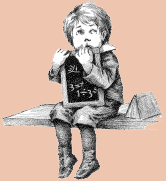
In the UK, according to the Association of Teachers and Lecturers, children as young as five are not able to play because they are under so much pressure from national tests. They become bored with the constant assessment and dislike school from the their first year.
Rising truancy rates and increasing numbers of children leaving school early have been blamed on high stakes testing which, according to the National Association of Head Teachers, is causing children to feel stressed and disenfranchised; reducing children “to widgets on a production line”; and reducing schools to “exam factories”.
The Times Education Supplement found that “more than a third of seven-year olds suffer stress over national tests and one in 10 loses sleep because they are so worried about them…. By the age of 11, two thirds of children show symptoms of stress as they revise for national tests.”
If you have any examples or updates you would like to contribute please email them to me and I will add them here. Please give references for where you sourced the information.




 Previous
 Next
Next