 |
Business-Managed Democracy » Government » Privatisation » Problems » Employment |

Cost savings in privatised utilities are often made by lowering rates of pay and conditions for workers or cutting the full-time workforce. Thousands of jobs are normally shed ahead of, and just after, privatisation of government enterprises and services. Full-time permanent employment in privatised enterprises is increasingly 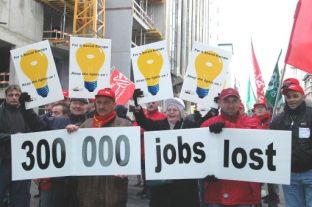 replaced by part-time and temporary work. Direct employment is steadily replaced by contract employment and contract workers tend to be non-unionised, poorly paid, with little employment security and no access to benefits such as sick leave, holidays and pension contributions. There is even a trend to employ contract workers on a self-employed basis, to avoid having to pay any statutory benefits.

In the US electricity deregulation has led to 150,000 people losing their jobs, including 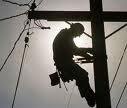 those who were responsible for safety and reliability of electricity supplies, as private deregulated utilities shed staff so as to cut costs. The Utility Workers Union of America (UWUA) and the US Department of Energy’s Energy Information Administration (DOE EIA) estimate that utilities now employ less than two thirds of the workers they did in the early 1990s. The UWUA claims that cost-cutting has led to the less frequent inspections, deferred repairs and less training, which threaten worker and public safety as well as system reliability.
 .
.In Australia employment in the electricity sector fell from about 83,000 in the mid-1990s to 33,000 workers in 2003. The State Eelctricity Commission of Victoria (SECV) shed 11,000 jobs before privatisation but the government still felt the need to put the retail price up ten percent to make its enterprises attractive to buyers (and perhaps to give the impression that privatisation caused prices to fall). Another 2,200 jobs were subsequently shed by the privatised companies in their efforts to become more efficient. In all, thousands of jobs were lost but electricity prices were no lower than in neighbouring NSW where electricity was not privatised.
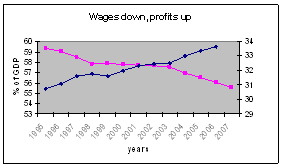
Some 66,000 jobs were lost in the UK electricity industry and pay and conditions were undermined. In Europe, as profits of the large multinational energy companies have increased (see graph below), wages declined and 300,000 jobs were lost in the gas and electricity sector over ten years.
Graph: Trend in wages and profits as a share of GDP – 1995-2007
for European energy sector
’, General Purpose Standing Committee No. 3, NSW Legislative Council, 3 June 2009, p. 78.Private prisons cut their costs mainly through cuts in the costs of employment.  For example, in the UK according to the Serco Institute, private prisons get half their cost-savings from having less staff than public prisons and half from paying those staff less salaries and fewer benefits.
Since salaries account for around 60 per cent of prison budgets, eroding pay and conditions and the marginalisation (or exclusion) of unions have been the principal objectives of the privatisers. The results have invariably been lower-quality and inexperienced staff, less training and a higher rate of attrition.
Because they keep wages low, private prisons are unable to be selective in hiring to ensure personnel "have appropriate moral, psychological and physical qualities for the effective exercise of their functions." Prison guards in private prisons receive less training and tend to be less experienced.
the turnover rate for security staff in private prisons in the U.S. is over 50 percent, compared to just 16 percent for public facilities. In the United Kingdom, staff turnover at private prisons is 35 percent, while it is only five percent in the public sector. Turnover rates at individual prisons can be much worse than these averages: one private facility in Florida reported an annual staff turnover rate of 200 percent...
Private prison companies generally pay employees less than public institutions in both direct salary and fringe benefits. For instance, the starting salary for guards at a private prison in Alabama is $7 per hour, compared with $11 per hour for public guards. In the U.K. the average pay for private prison officers is more than 50 percent less than it is for public prison officers.
The staff-to-inmate ratios are 15 percent lower at private prisons than public ones, which increases the workload for private guards. Employees in one private British detention center had to work 12-hour shifts with no lunch breaks for 7-day stretches.
', Corporate Watch, London, September 2012, p. 15.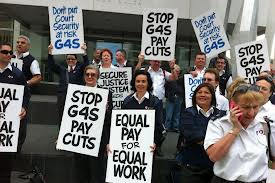 G4S is able to offer outsourced government services at cheaper rates that government mainly by cutting back on employee costs, which means fewer employees who have less salaries and conditions and often less training: "In the UK, complaints have been made against G4S detention centres for being under-staffed, leading to detainees missing medical and court appointments... Whistleblowers have accused the company of not providing adequate training to security guards 'escorting' refugees on mass deportation flights."
', Corporate Watch, London, September 2012, p. 16.In developing countries wages can be below subsistence and in 2006, Union Network International (a global union federation) lodged a complaint against G4S for poor wages and conditions. Workers in several countries accused G4S of "denying workers basic rights, cutting healthcare and other benefits and opposing recognition and bargaining campaigns by security guards".
On Manus Island, PNG (pictured), local guards are paid $180 per week and given as  little as two weeks training before starting work while guards from Australia get $2000 per week. The manager of G4S PNG, Kerry McNamara, was dismissed from the Victorian police force for misconduct.
Reference: 'G4S: A Company ProfileAt Wolds prison in East Yorkshire, which has been run by G4S since 1992, a report by HM Inspector of Prisons in April 2012 found that levels of illegal drugs "remained high" and that poor behaviour of some inmates "was not always confronted or addressed." According to the report, the provision of health care "had worsened" and a third of the single cells that had been doubled up to hold two prisoners were "too cramped, lacked sufficient furniture and had poorly screened toilets."
', Corporate Watch, London, September 2012, p. 19.G4S has also been accused of exploiting prison labour, paying them very little to work 40 hour weeks in the prison, without choice. In this way, work that had been transferred to India has been transferred back to the UK to be done in prisons and G4S has promoted this "committed workforce and low overheads" to the UK business community.
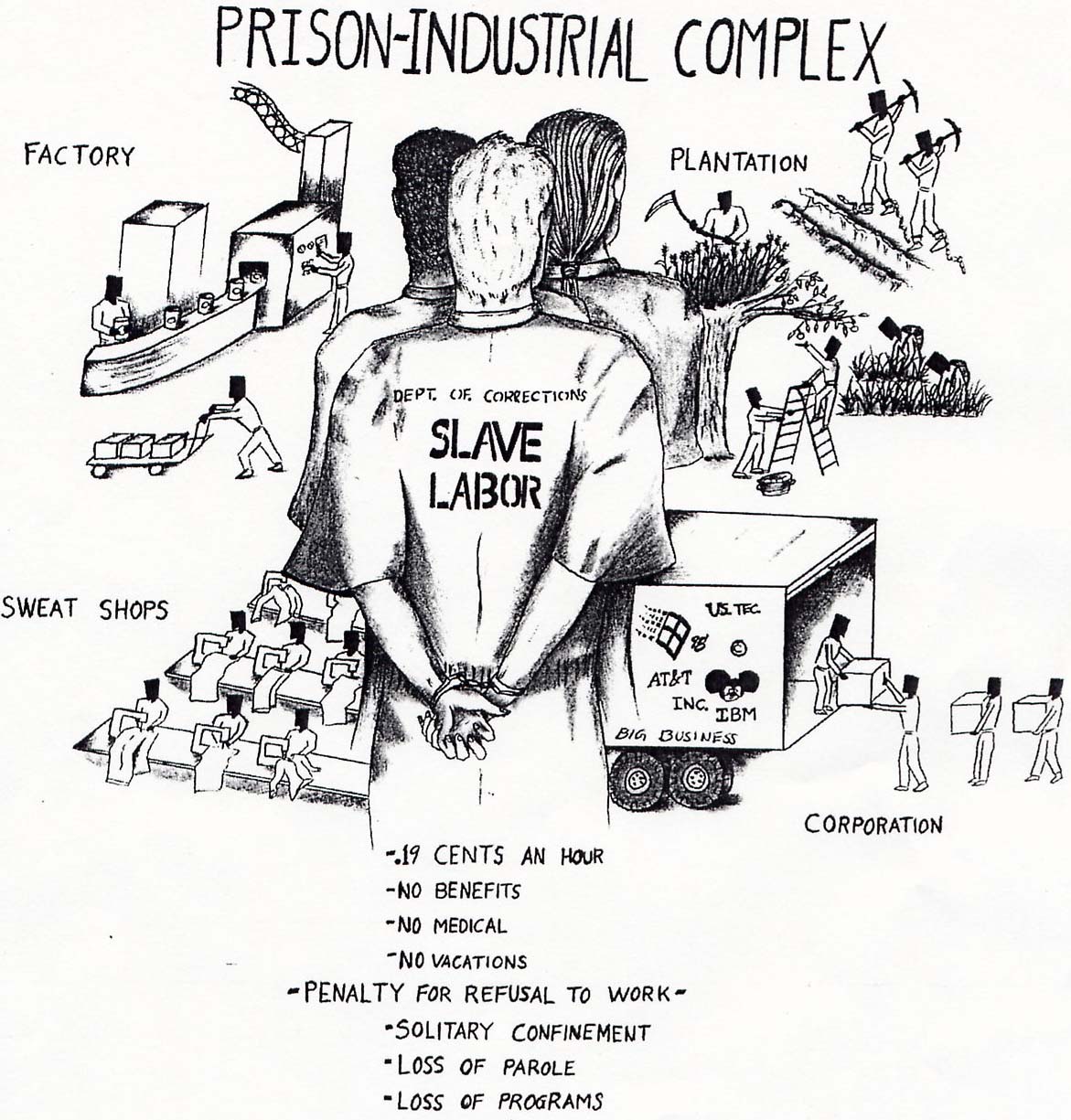
Prisoners are also exploited as a cheap source of labour in 37 states of the US and this labour is used by major corporations including Starbucks, MacDonalds, IBM, Boeing, Motorola, Microsoft, AT&T, Wireless, Texas Instrument, Dell, Compaq, Honeywell, Hewlett-Packard, Revlon, Macy's and Pierre Cardin. In some cases prisons have become even more attractive for manufacturing as developing nations.
For the tycoons who have invested in the prison industry, it has been like finding a pot of gold. They don't have to worry about strikes or paying unemployment insurance, vacations or comp time. All of their workers are full-time, and never arrive late or are absent because of family problems; moreover, if they don't like the pay of 25 cents an hour and refuse to work, they are locked up in isolation cells...
Along with war supplies, prison workers supply 98% of the entire market for equipment assembly services; 93% of paints and paintbrushes; 92% of stove assembly; 46% of body armor; 36% of home appliances; 30% of headphones/microphones/speakers; and 21% of office furniture. Airplane parts, medical supplies, and much more...
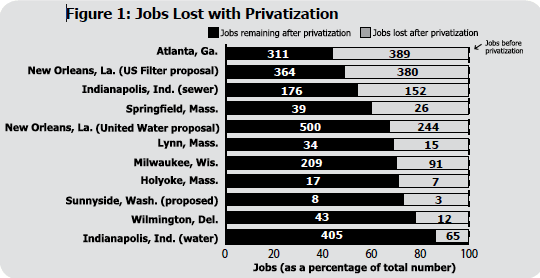
In the US, privatisation of existing water and sewerage systems have resulted in the loss of about one third the jobs (see figure below). Those keeping their jobs have seen their workloads increase and more experienced staff are often replaced by staff with less qualifications and experience on lower pay. As with electricity, this can lead to a lowering of service quality as the downsized workforces are less able to make speedy repairs and keep up with backlogs of work.




 Previous
 Next
Next