|
|
Mid-South Coast Newsletter
April 2023 |
|
|
|
|
|
|
|
|
Flying Fox Camps in Eurobodalla
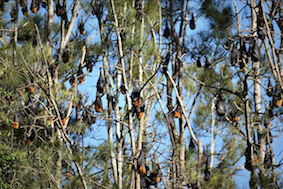
An estimated 12,000 grey-headed flying foxes are currently living in the Eurobodalla Shire, taking advantage of flowering eucalypts before moving on for the winter.
“Flying-fox numbers typically peak here between December and May, with six of Eurobodalla’s eight known camps occupied this season,” Council’s manager of environmental service, Deb Lenson said.
“Currently there are four occupied camps – the newest of these located in the Moruya township area, which is not often used and is extending into some new areas.
“We’ve done a letter-box drop for nearby Moruya residents – who may be less familiar with living alongside a camp – with information about services available to them. We try to help residents and business better understand flying-fox movements to minimise impacts such as noise, odour and faecal drop.”
Grey-headed flying-foxes are nationally listed as threatened – with declining populations and significant loss of habitat. It is illegal to disturb or kill flying-foxes without authorisation. Ms Lenson said the public health risk from flying-foxes was negligible.
Ref: Bats fly in for flowering gums, The Beagle, 15 March 2023.
|
|
|
|
|
|
|
|
|
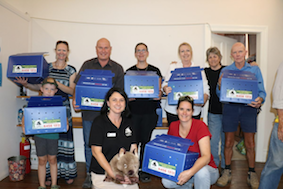
Snowy Mountains Wildlife Rescue members with rescue packs bought with a WIRES grant.
|
|
|
|
|
WIRES Grants to Snowy Mountains
WIRES has supplied funds to the Snowy Mountains Wildlife Rescue group LAOKO. The first grant was for 35 LAOKO members to take an online WIRES basic training course. The second was for 35 NRMA wildlife rescue kits purchased from Byron Bay Wildlife Hospital (see July 2022 newsletter for info about the kits).
LAOKO is independently operated and based in the Snowy Monaro region. They received 600 calls in the last 8 months from members of the public for help with injured and orphaned wildlife.
Ref: Gail Castaway, Grants to the rescue as wildlife carers receive much-needed support, About Regional, 15 March 2023.
|
|
|
|
|
|
|
|
|
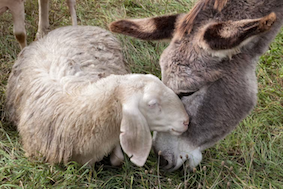
Guardian donkeys are effective dingo deterrents.
|
|
|
|
|
Coexisting with Dingoes
In NSW landholders are required to kill dingoes and wild dogs on their properties. However dingoes can actually help graziers because they kill or scare off foxes and feral cats that are predators as well as kangaroos and goats that compete for grass.
A new approach, human-wildlife coexistence, has been recognised by the UN Convention of Biological Diversity. And the Humane Society International has published a guide to Predator Smart Farming that seeks to modernise Australia’s approach to livestock protection.
This approach utilises non-lethal tools to protect livestock including the use of dogs and donkeys to defend livestock, fencing and deterrents such as lights, sounds and smells. For example one cattle farmer found that two male donkeys effectively reduced calf deaths from 53% to 6%.
Ref: Louise Boronyak and Bradley Smith, Killing dingoes is the only way to protect livestock, right? Nope, The Conversation, 15 March 2023.
|
|
|
|
|
|
|
|
|
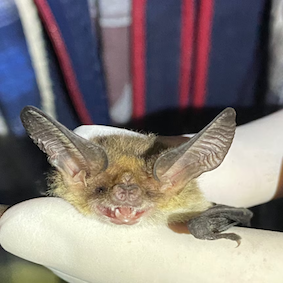
A tiny insect-eating bat found on a winery in the Northern Tablelands. (Photo supplied by Zenon Czenze) |
|
|
|
|
Bats Provide Pest Control
Researchers at the University of New England (UNE) are investigating the way moth-eating bats could reduce the use of pesticides in wineries in NSW.
They are investigating what species of bats exist on two wineries in the NSW Northern Tablelands and whether they are eating moths. If so they could work out ways to increase the bat populations, such as artificial tree hollows in surrounding native bush. In this way they could avoid the use of pesticides.
The wine industry spends $50 million a year nationally on pesticides. UNE researcher Dr Zenon Czenze said: "If we can reliably show the cost of creating bat habitats is significantly less than the cost of pesticides then hopefully we can see this paradigm shift in biodiversity farm management practices, which can be applied to vineyards and potentially other crops that have moth pests as well."
Ref: Grace O'Dea, Research into moth-eating bats could drive natural pest control on Australian vineyards, ABC News, 14March 2023.
|
|
|
|
|
|
|
|
|
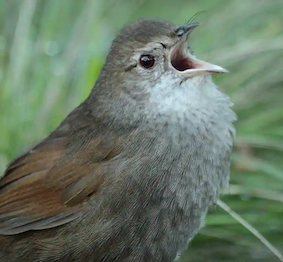
Photo: Eastern bristle bird by Todd Burrows |
|
|
|
|
AI Tracks Eastern Bristlebird
The endangered eastern bristle bird had not been sighted in south-east Queensland since the 2019/20 bushfires. It is a shy, nondescript, brown bird, which flits along the ground between shrubs and there are only a few left, so the best way to find them is by their call.
This could be a long, hit and miss endeavour if it were not for “passive acoustic monitoring”. Even then, without artificial intelligence (AI), it would take too long for scientists to go through many hours of recordings listening for the bristle bird call.
A PhD student from Queensland University was able to pick the call from the recordings and train an AI program to recognise it. The program was then able to find 350 eastern bristle bird calls in 2 months worth of recordings.
The researchers are now expanding their monitoring over a broader range of habitat.
Ref: Joe HInchliffe, Scientists hail AI ‘gamechanger’ as they track down bird feared lost since black summer bushfires, The Guardian, 18 January 2023.
|
|
|
|
|
|
|
|
|
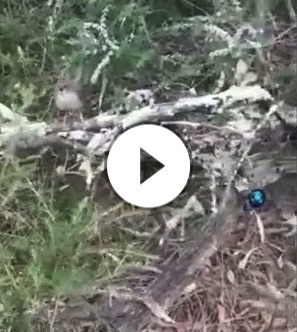
Videos by Amber Hodgson, Eliza Campbell & Abigail Robinson. |
|
|
|
|
Fairy-Wren Rodent Run
Male and female superb fairy-wrens pretend to be rodents so as to distract predator birds from attacking other wrens.
"To do this, birds approach the threat to within striking range, assume a hunched posture, and scurry back and forth like a mouse." This behaviour distracts the predator. However “altruistic distraction display” is risky for the bird performing it and they will only do it to protect fairy wrens in their own breeding group (see Superb Fairy-Wren Societies, Feb 2022).
Ref: Ref: Ettore Camerlenghi and Anne Peters, Fairy-wrens are more likely to help their closest friends but not strangers, just like us humans, The Conversation, 10 March 2023. |
|
|
|
|
|
|
|
|
Some Pics from WIRES Mid-South Coast |
|
|
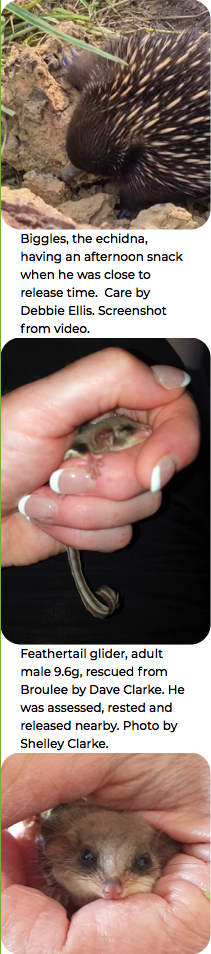
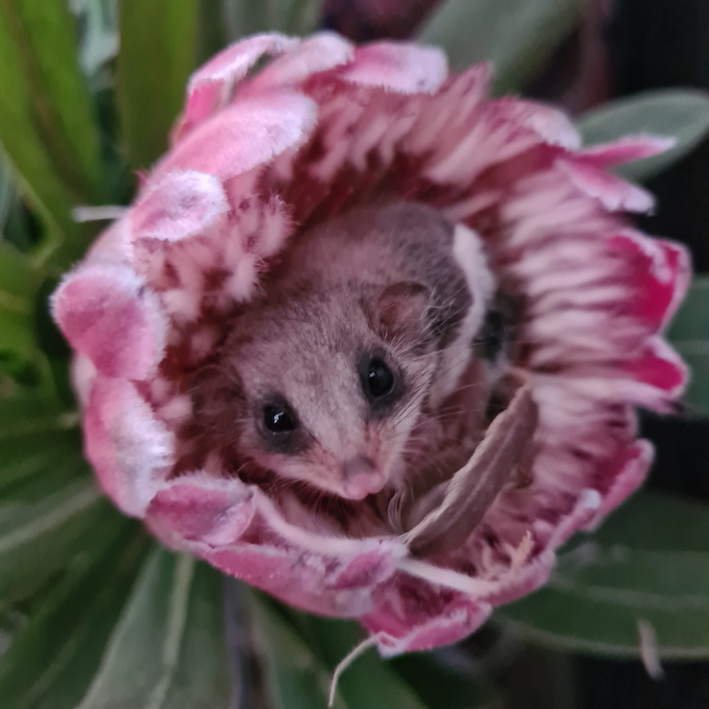
Feathertail glider, adult 9.5g, rescued from Termeil by Shontae Giles after he caught his foot in a shower track. Photo by Shelley Clarke. |
|
|
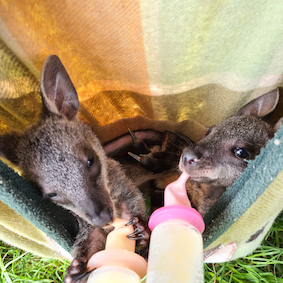
Poppet and Pippin, wallaby joeys cared for by Debbie. Photo by Debbie Ellis. |
|
|
|
|
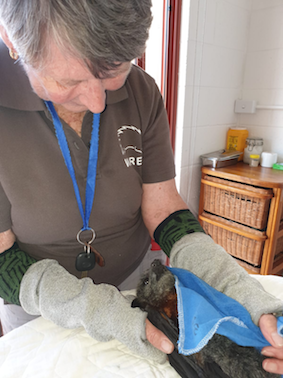
Grey-headed flying fox rescued from Batehaven by Shelley and Dave Clarke. Photo by Shelley Clarke. |
|
|
Janet, the “Bat Whisperer”, reassuring the flying fox. Photo by Shelley Clarke. |
|
|
|
|
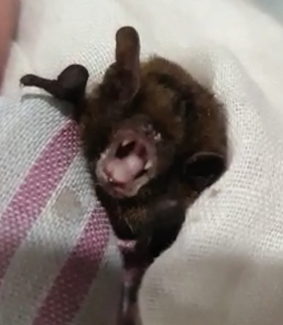
Little forest bat, 3.46g, enjoying his food. In short term care with Kylie Lopes shortly before release. Screenshot from video. |
|
|
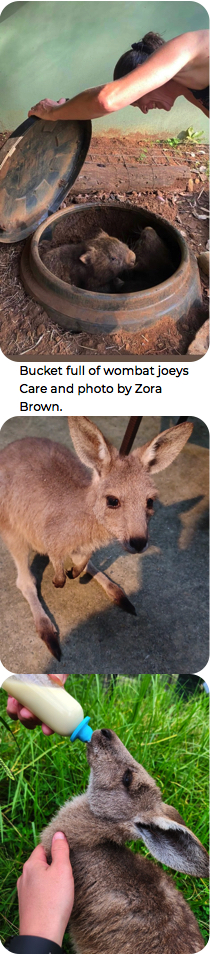
Ida, female kangaroo joey, 7kg, from Murramarang Resort recovering from Babesia (top) in care of Janelle Renes. Her mother could not be found so she is now in the care of Caz Roberts until she is weaned and can be released. Photos by Janelle and Caz. |
|
|
|
|
|
|
|
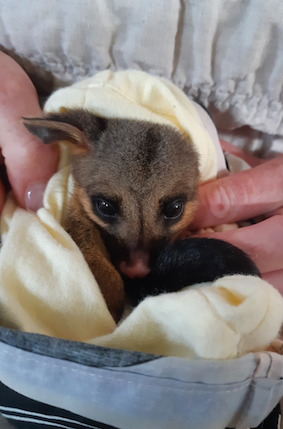
425g male brushtail possum joey found in pouch of deceased mother by Dave Clarke. Photo by Shelley Clarke. |
|
|
|
|
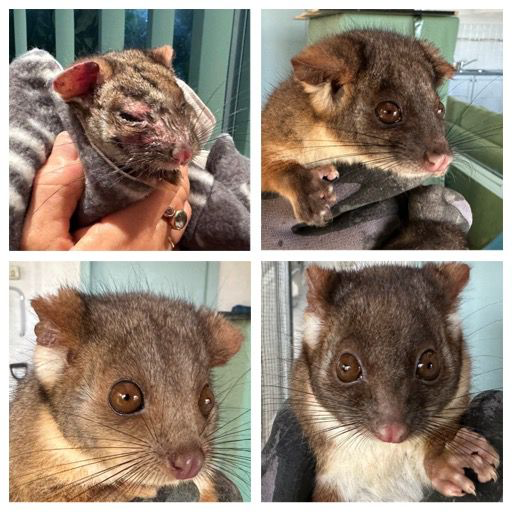
Ringtail possum joeys, Ringlets, Bear, Roxy and Rosie, shortly before release. Care and photos by Renate Cooper. |
|
|
|
|
|
|
|
|
Termeil feathertail glider being cared for by Debbie. Photo by Debbie Ellis. |
|
|
|
|
|
|
|
Notices
Branch General Meeting: Saturday 6 May upstairs at the Hotel Adelaide conference room, Moruya, commencing 10:30am - and also on Zoom. Lunch afterwards will be at the restaurant downstairs.
Information Session and Members Catchup, Sunday 16 April, 10am to 12pm, Eurobodalla Botanic Gardens. Come for a coffee and stay for lunch if you'd like to.
|
|
|
|
|
|
|
Raptor Rescue Guidelines
by Sandy Collins and Shane O’Keefe, Raptor Coordinators.
Rescues of
raptors should preferably be done by experienced rescuers with new members
watching & assisting where possible to gain the skills to handle such birds,
particularly large raptors.
It is recommended for anyone interested in rescuing
raptors to sign up for a Raptor Rescue Course, which discusses safe
techniques and common rescue scenarios.
Please refer also to
the WIRES Avian Manual (5th Edition), vol 2, p. 248.
- Call MOP and get
more info and let them know you will attend ASAP
- Plan the equipment
required for rescue:
- Gloves
- Towels—these can be used to make U shape support or rolled into a soft log or used to cover the box
- Appropriate container—solid sides are preferred so feathers aren’t damaged (lined rescue basket, cardboard box or soft pet carrier for large raptors) – has to be covered over with a towel
Contact the coordinators, Sandy Collins via
text (preferred) or phone call 0418 657 637 and if you can not contact her
please call Shane O’Keefe 0415 142 859. If possible, include photo of the bird taken at the rescue site.
Please do not attempt to handle or examine the bird.
Your
coordinators will guide you with the next most suitable steps for the bird of
prey. Depending on the state of the bird this may be:
- Transport
to an experienced avian carer for stabilisation
- Transport
to a nominated raptor vet for immediate intervention.
Preferred vets in the area
include Caseys Beach Vet, Moruya Vet, Montague Vets, Ulladulla Vets. But please
attempt to get in touch with the coordinator first.
Many broken bones can be repaired
by specialist avian veterinarians and we attempt to give our raptors the best
care we can get. Please attempt to get a second opinion on the case at hand if
unsure about how this case should be managed. |
|
|
|
|
|
|
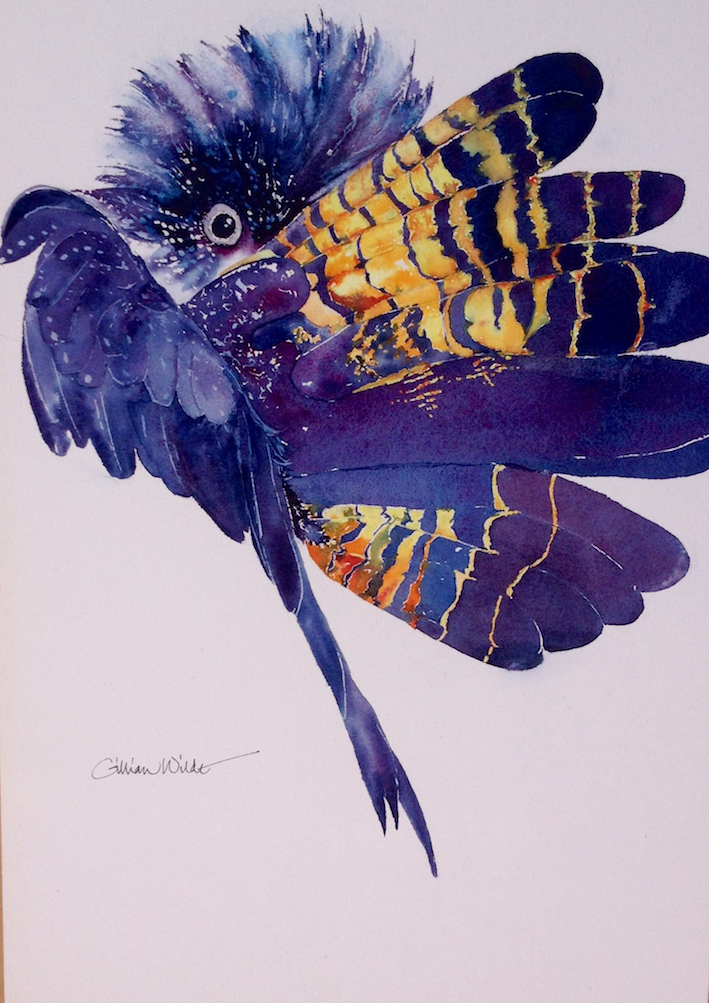
Art exhibition - Ward and Wilde - Birds of a Feather |
|
|
When: 18 March - 23 April
Where: Basil Sellers Exhibition Centre, corner Vulcan Street and Campbell Street, Moruya
Opening hours: Daily, 10am – 4pm
This exhibition presents the work of two artists, Mark Ward and Gillian Wilde, responding to their passionate interest in birds. |
|
|
|
|
|
|
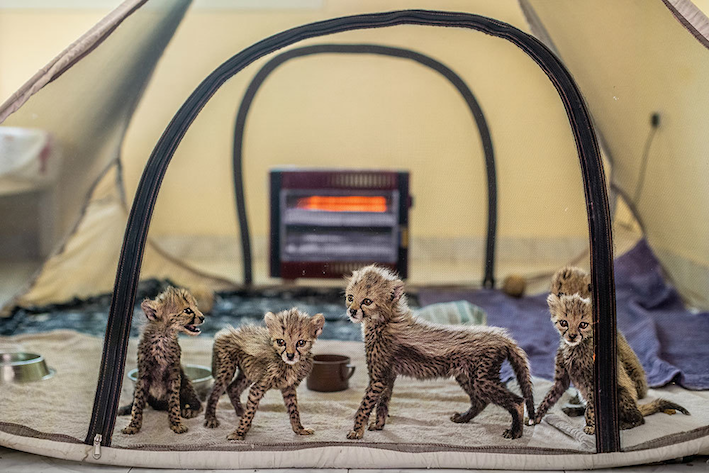
Cute—and rescued: These five rescued cheetah cubs are corralled in a tent in front of a heater. Just six weeks old, they require feeding every few hours. One veterinarian at a time serves as the primary caretaker for very young cubs, even sleeping next to them. The organization in Somaliland houses the region’s cheetahs confiscated from poachers and smugglers. Photo by Nichole Sobecki. |
|
|
|
|
|
|
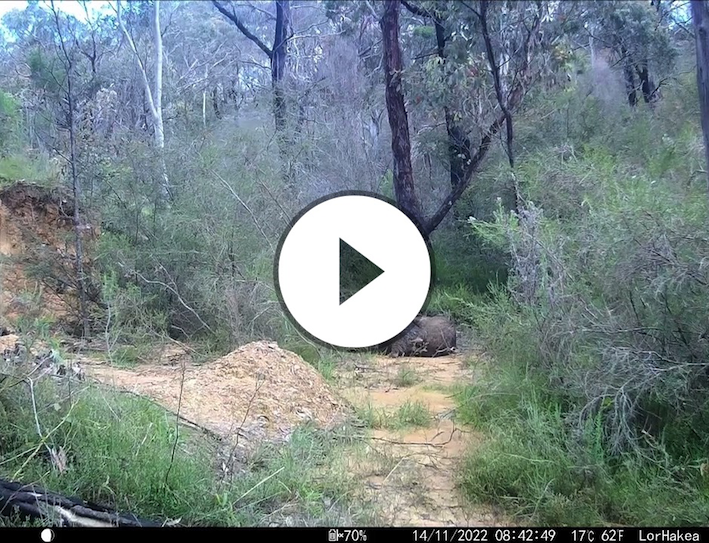
Featured YouTube: Rare footage of Wombats mating (sideways) at Tomboye, NSW. |
|
|
|
|
|
|