|
|
Mid-South Coast Newsletter
February 2022 |
|
|
|
|
|
|
|
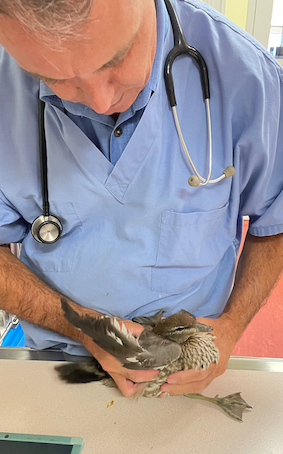
Photograph: Casey's Beach vet, Dr Sean Harrison, examining duck with angel wings by Megan Owen-Jones. |
|
|
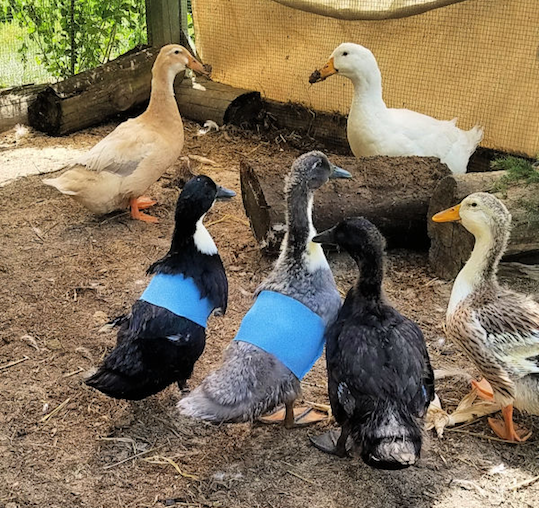
Photograph: Treating angel wing in ducklings. |
|
|
|
|
Duck with Angel Wing
Last month a member of the public reported a duckling in the pool area of a resort in Batehaven with “damaged wings”. Its wings were “permanently splayed out”.
This condition is known as angel wing and it is thought to be the result of poor diet in water fowl birds including ducks, geese and swans. Young birds that are fed an unnaturally rich diet, high in protein or carbohydrate can get it. For example ducklings fed large quantities of bread even for a short period of time, are susceptible.
The ducklings grow faster than their wing bones, and the weight of their "growing flight feathers stress the developing muscles that move the wing bone causing twisting and slipping”. As a result they develop a deformity in the last joint of one or both wings that can lead to them being unable to fly as adults.
If the bird is young enough, its wings can be bound and supported while it is fed a proper diet as its wings become stronger. Recovery can occur in only a few days. Older birds can live with the condition as long as they are protected from predators.
Unfortunately, it was too late to correct the angel wing in this duckling and it had to be euthanised.
Ref: Angel Wing in Birds, Wag!, accessed 12 January 2022.
|
|
|
|
|
|
|
|
|
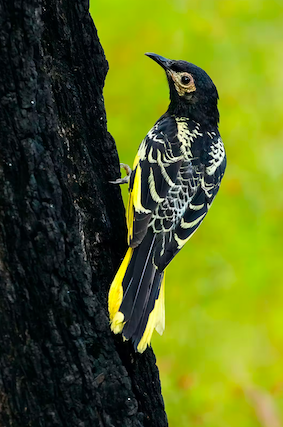
Photograph: Regent honeyeater by Lachlan Hall. |
|
|
|
|
Decline of the Regent Honeyeater
The beautiful regent honey eater is heading for extinction despite once being seen in “immense flocks" on Australia’s east coast. There are now fewer than 300 left.
Their territory is the flowering gum forests but the best of these have been turned into farmland. The remaining large tracts of forest are on poor soil and the trees there do not produce the rich nectar the regent honeyeaters need for breeding. There are few large tracts of gum forests left and the honeyeaters are no longer able to form the large flocks they need for protection from aggressive birds such as noisy miners.
"Unfortunately, we continue to destroy essential regent honeyeater habitat in some areas even as we attempt to restore lost habitat elsewhere. For example, if the Warragamba Dam in the Blue Mountains is raised it will flood essential habitat and make it even harder to bring back our iconic honeyeater."
Ref: Rob Heinsohn et al, Regent honeyeaters were once kings of flowering gums, The Conversation, 13 January 2022.
|
|
|
|
|
|
|
|
|
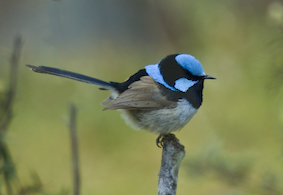
Photograph: Superb fairy-wren (male) by Sharon Beder. |
|
|
|
|
Superb Fairy-Wren Societies
Superb fairy-wrens were named bird of the year in a poll held by the Guardian newspaper and Birdlife Australia.
Researchers at Monash University have found that superb fairy-wrens organise themselves into complex multilevel societies, like those of large-brained mammals.
Like other Australian birds, superb fairy-wrens breed in small family groups where non-breeding adults and earlier offspring help the dominant breeding pair. However the researchers found that breeding groups of fairy wrens "associated with other breeding groups to form supergroups. And this was usually done with individuals they were genetically related with.
"In turn, these supergroups associated with other supergroups and breeding groups on a daily basis, forming large communities. In the following spring, these communities split back into the original breeding groups inhabiting well-defined territories – only to join again next winter."
Ref: Ettore Camerlenghi and Anne Peters, (The most social) bird of the year: why superb fairy-wren societies may be as complex as our own, The Conversation, 10 January 2022.
|
|
|
|
|
|
|
|
|
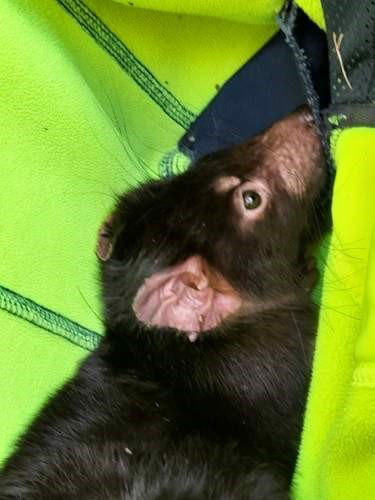
Photograph: Baby Tasmanian devil joey found in mailbox by Mesha Black. |
|
|
|
|
Baby Devil Joey in the Mail
When Mesha Black was delivering mail to a letterbox in southern Tasmania she got a bit of a fright when a baby Tasmanian devil hissed and snapped at her from inside the letter box that she had just reached into.
Mesha telephoned Bonorong Wildlife Rescue and they advised her how to get the joey out of the letterbox for transport to a carer. “I managed to get her out and wrapped up in my jumper and got a fair few squeals and screeches”.
The carer, Sandra, found the joey to be dehydrated and underweight and thinks its mother was probably killed by a car and it was unable to look after itself. The joey has been treated for pneumonia and is now gaining weight.
Ref: Lucie Cutting, Postie finds injured Tasmanian devil joey in Australia Post letterbox, ABC News, 23 December 2021.
|
|
|
|
|
|
|
|
|
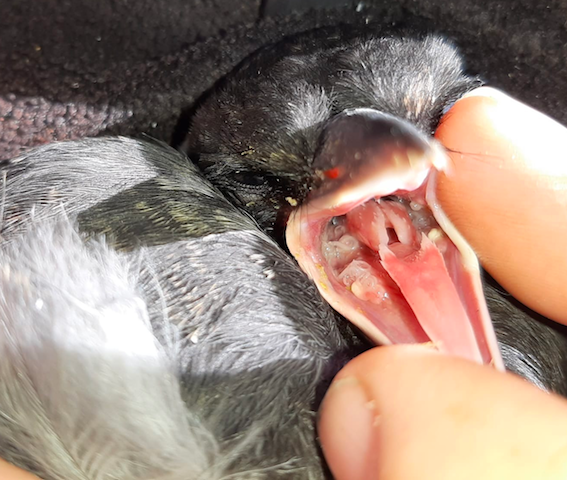
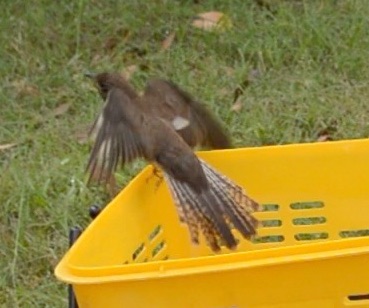
A magpie chick with throat worm. Photo by Shelley Clarke.
Throat worm is a parasite that mainly infects magpies but boobook owls, butcherbirds, cuckoo shrikes, magpie larks and other birds can also be infected. It is a white worm found in the mouth and throat of the bird which causes nodules to form around them that can block the throat.
"A bird with throat worm will display a variety of symptoms, including white worms and blisters around the tongue and bottom of the mouth, difficulty with breathing/swallowing, a wheezing cough, weight loss and a pale gape.”
Medication can kill the worms and then the dead worms need to be removed with tweezers a few days later. The blisters should then clear up and the bird can be released.
Ref: A Frightful Affliction, Kanyana Wildlife Rehabilitation Center, 15 January 2018.
|
|
|
|
|
|
|
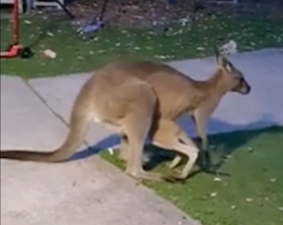
Joey reunited with its mother. Screenshot from video by Kylie Lopes. |
|
|
|
|
Nice Way to Start the Day
by Kylie Lopes
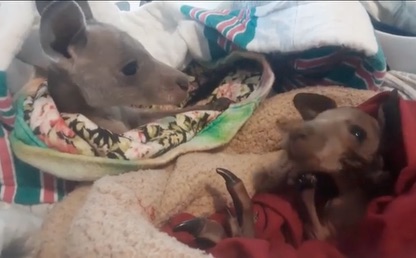
A happy ending for a 3kg eastern grey joey separated from its mother in South Durras. The reason the mother took off is unknown, but it is suspected that it was spooked by some kids at the campsites.
After a warm, snug sleepover, bub was returned to where mum last had her and a very concerned mumma was right there waiting. Thanks to a member of the public for providing great info. |
|
|
|
|
|
|
|
|
|
Little Forest Bat
by Janet Jones
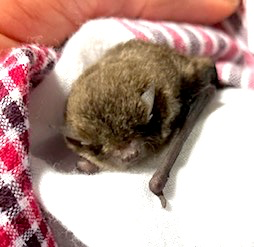
Kay Mallitt rescued this Little Forest Bat, named ‘Kell'. It was hanging onto an external wall in North Batemans Bay. He weighs 3.5g, a juvenile, needing three supplementary feeds a day.
Any microbat not tucked away safely in its roost is compromised in some way and needs to be brought in for assessment and appropriate care. Microbats are territorial. At this time of year, if it is healthy, an appropriate weight, and fully rehydrated, after 3 days it will be released back at the place it came from when weather conditions are suitable.
Like all Little Forest Bats, Kell is quite vocal when being collected for feeding! |
|
|
|
|
|
|
|
|
|
New Feathertail Glider Enclosure |
|
|
|
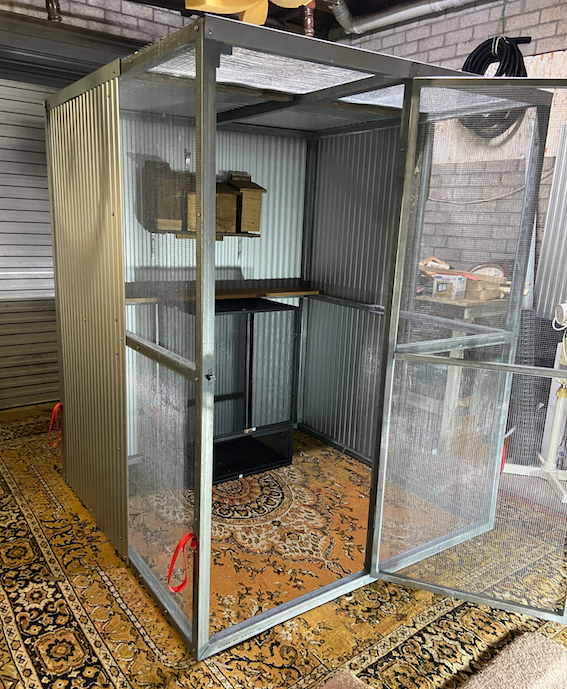
A feathertail glider pre-release enclosure has been set up at Alan Nash’s place. "Just need to wash interior with vinegar, put shade cloth behind door, set up swings, slippery dip and monkey bars and then we're open for business. Will call it Alcatraz, there will be no escapees here”. Photo by Alan Nash.
|
|
|
|
|
|
|
|
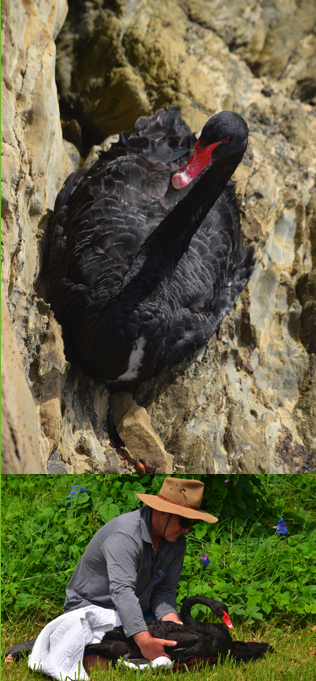
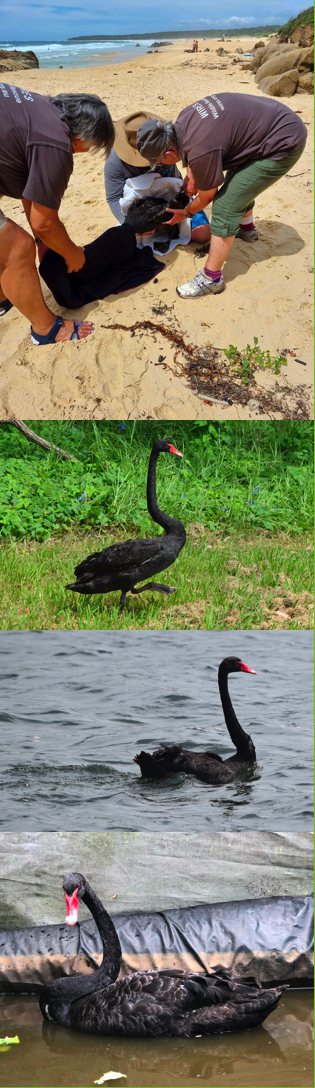
A juvenile black swan was on the rocks at Moruya Heads, possibly exhausted after being chased by dogs. It was caught by Dave Clarke and, with the help of Rachel McInnes, Liz Spiller, and Rachel O’Loughlin, released at Preddy’s wharf.
However the swan had to be rescued again a few days later and was transported by Shelley Clarke to rest and recover at Zora Brown’s place. Zora released it 6 days later, after it had gaining 600g, to join other swans.
Photos by Rachel O’Loughlin, Rachel McInnes and Zora Brown. |
|
|
|
|
|
|
|
|
|
|
More Pics from WIRES Mid-South Coast |
|
|
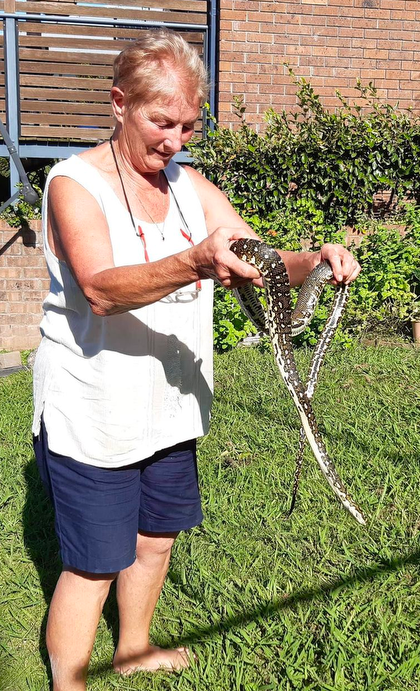
This diamond python was hit by a care and lost a few teeth but after treatment with antibiotics and pain relief and a couple of weeks in Kay Mallitt’s care, it was well enough for release. |
|
|
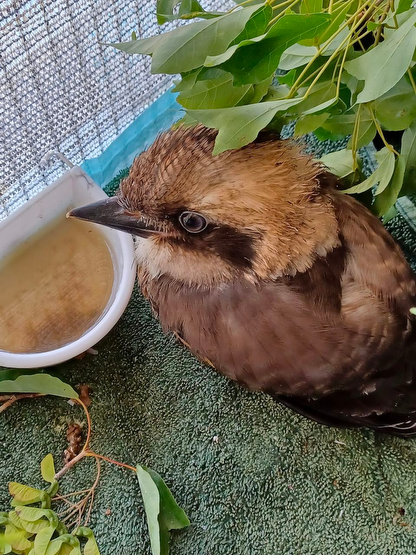
Koko, a branchling kookaburra, came into care, underweight and with a 16g ball of something unknown (kangaroo poo?) attached to its foot. Janelle removed it by soaking its feet in iodine and water. Photo by Janelle Renes. |
|
|
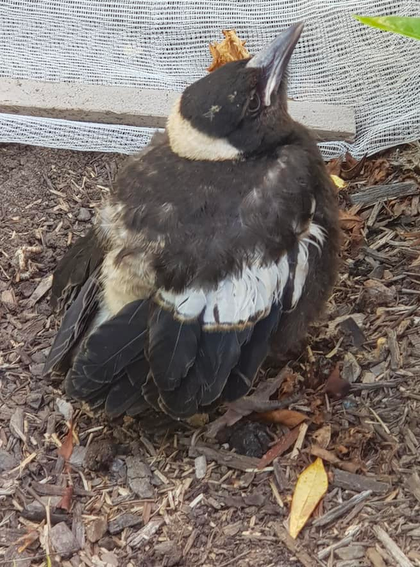
Jerry, the magpie chick, abandoned by his parents and now losing his tail feathers. Care and photo by Caz Roberts. |
|
|
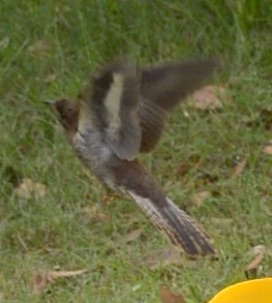
Release of 37g juvenile fan-tailed cuckoo after a couple of nights in care at Sharon Beder’s place with bad concussion from hitting a window at Turlinjah. Screenshots from video. |
|
|
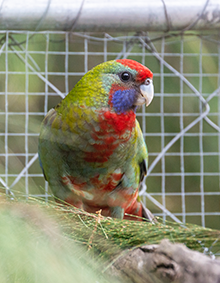
Juvenile crimson rosella recovering from internal injuries. Care and photo by Sharon Beder. |
|
|
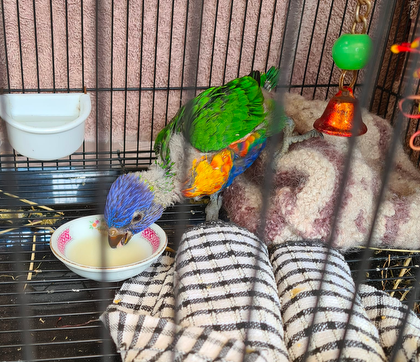
Chap, the rainbow lorikeet chick, starting to feed himself. Care and photo by Debbie Ellis. |
|
|
|
|
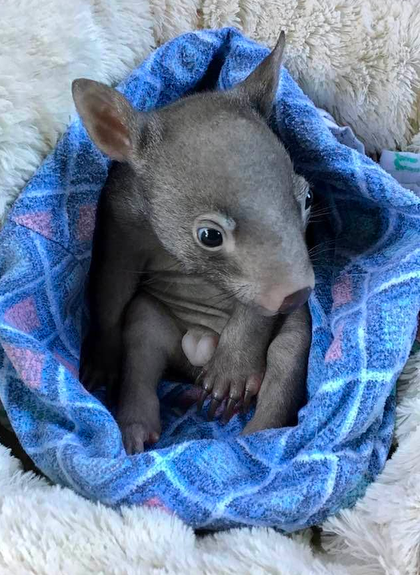
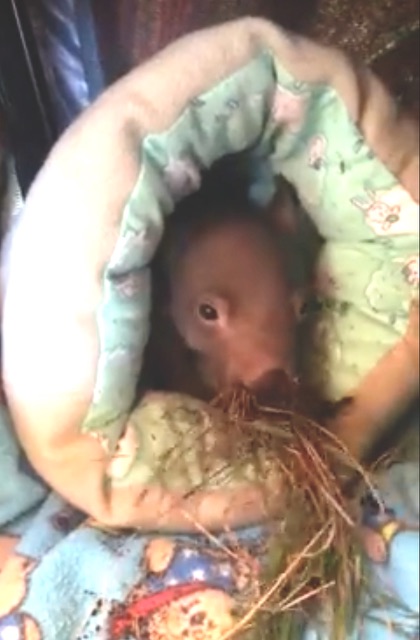
Gus, 1.4kg wombat joey, in care of Jan just before moving to Zora Brown’s care. Photo by Jan Sheehan. |
|
|
Gus in his new cocoon bed sewn by Zora Brown. Screenshot from video. |
|
|
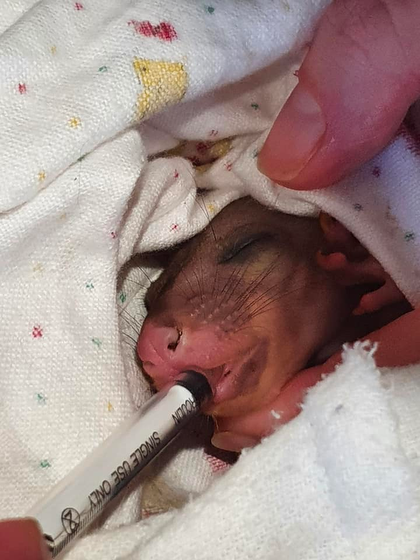
Brushtail possum joey abandoned by its mother in South Durras garage and cared for overnight by Kylie. It was reunited with its mother the next day but the mother was injured and both were taken to the vet. They are now in care of Sandy Collins. Photo by Kylie Lopes. |
|
|
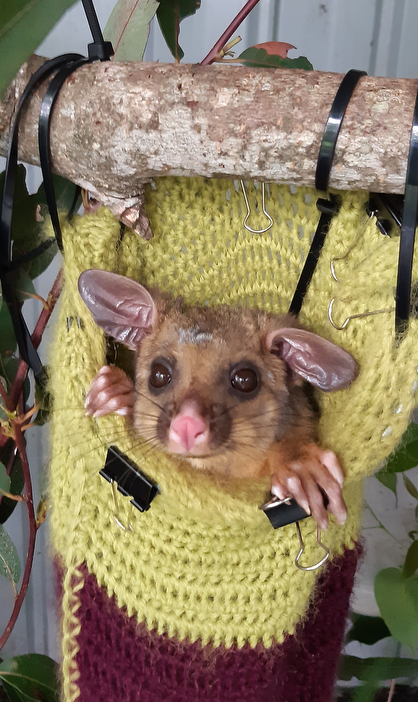
Rose, a brushtail possum joey. Care and photo by Shane O’Keefe. |
|
|
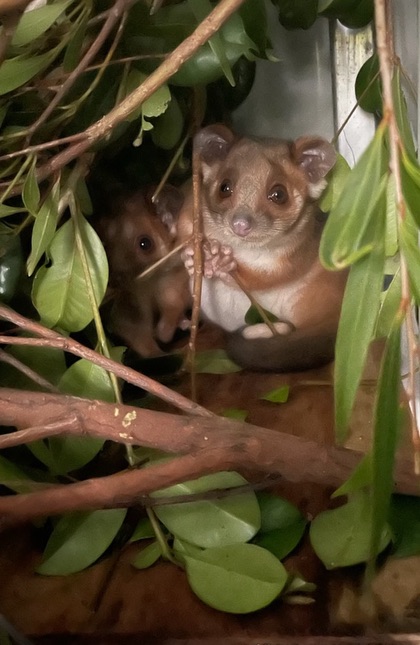
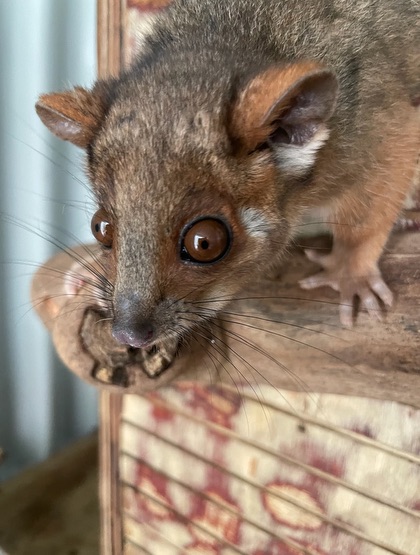
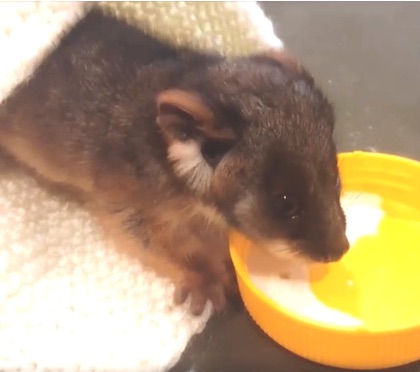
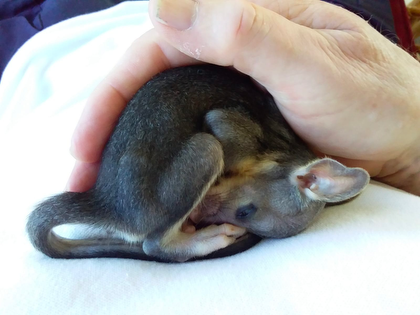
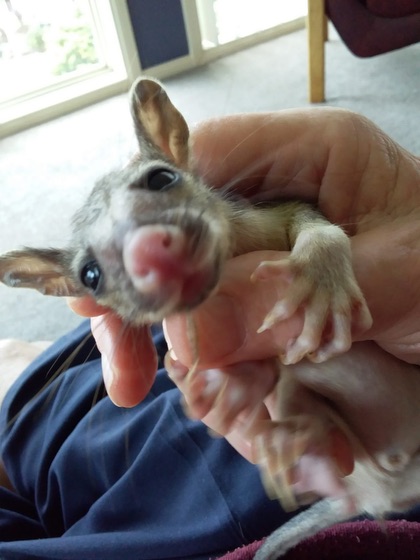
Ringtail possum joeys in care of Sandy. Photos by Sandy Collins. |
|
|
Dusky, a ringtail possum joey, in care of Nalda Paterson. Screenshot from video. |
|
|
|
|
Oscar, the brushtail possum joey. Care and photos by Ray Brown. |
|
|
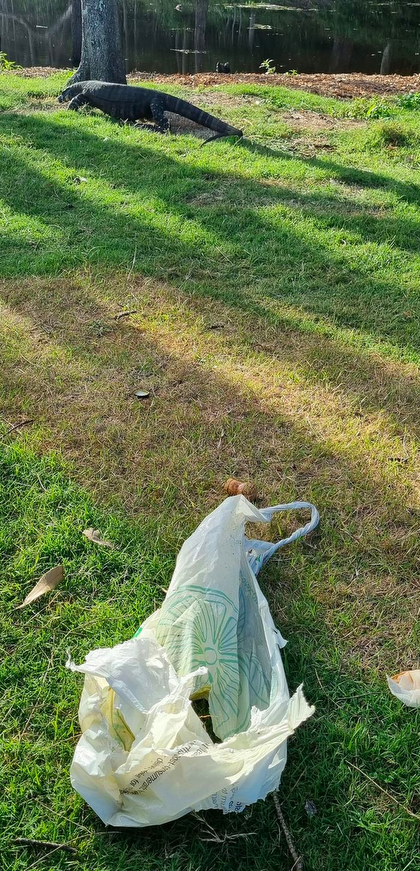
Large goanna (lace monitor) had been dragging a bag of rubbish around the campground for hours. With advice from Kay Mallitt, Rachel McInnes used a snake ‘jigger’ to hook the bag which tore free from the goanna as it walked away and escaped to the bush. Photo by Rachel McInnes. |
|
|
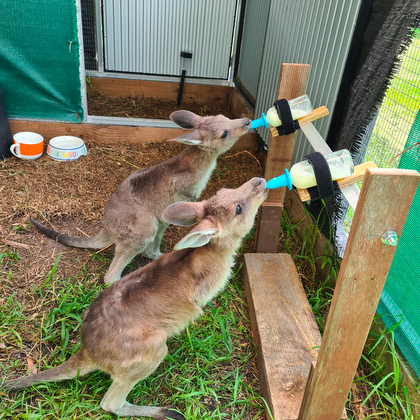
Bella and Hope having their first drink at the new milk bar at Debbie’s place. Photo by Debbie Ellis. |
|
|
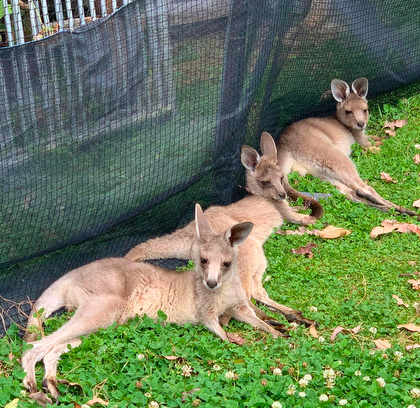
Sushi, Mia and Haru, kangaroo joeys, resting after eating grass most of the morning. Care and photo by Sandra Doyle. |
|
|
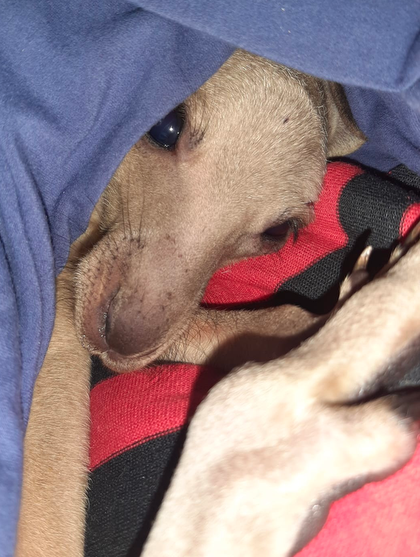
2kg male kangaroo joey, whose mother was killed by a car at Tomakin, on its way to Clare Hamer’s place to join joeys Lollipop and Minky. Photo by Shelley Clarke. |
|
|
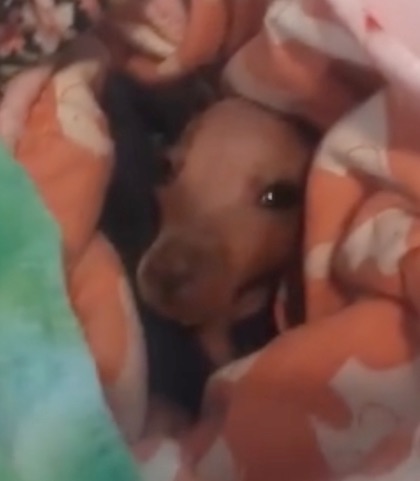
Obi, the kangaroo joey, with new buddy Bodie and baby sister Tanjie, below, in care of Nalda Paterson. Screenshots from video. |
|
|
|
|
|
|
|
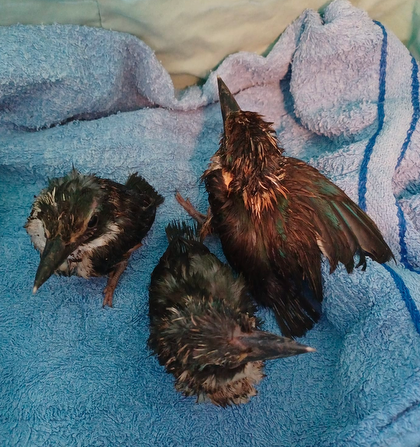
Three muddy kingfisher fledglings from Maloneys beach, cleaned up in a warm bath by Caz Roberts and Janelle Renes. |
|
|
|
|
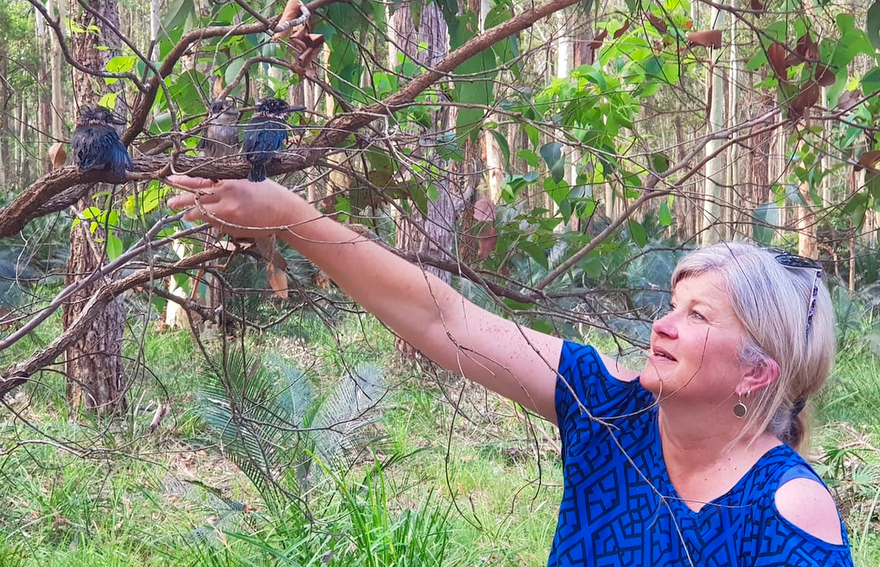
The kingfishers were returned to their waiting parents. Photos by Janelle and Caz. |
|
|
|
|
|
|
|
|
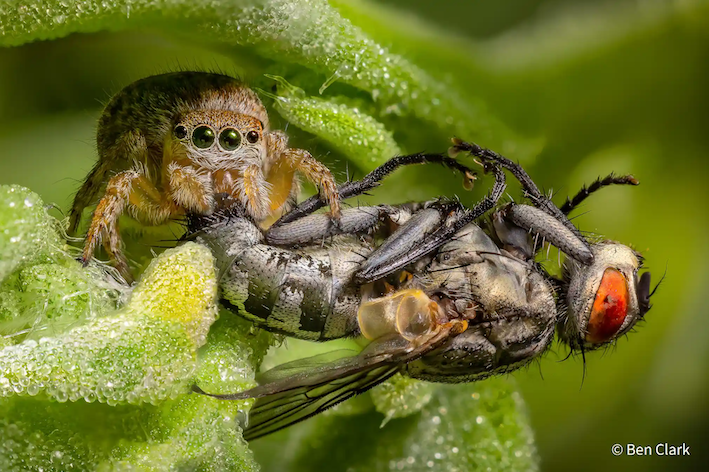
Step Into My Lair by Ben Clark
‘After photographing male peacock spiders dancing on the dunes of my local beach, I watched this scene of a less colourful female tackling a much larger flesh fly,’ Clark says. ‘It demonstrates the hunting prowess and power of these tiny jumping spiders, which reach just 5mm in length.’ Clark took this photo at Woodman Point in Western Australia. |
|
|
|
|
|
|
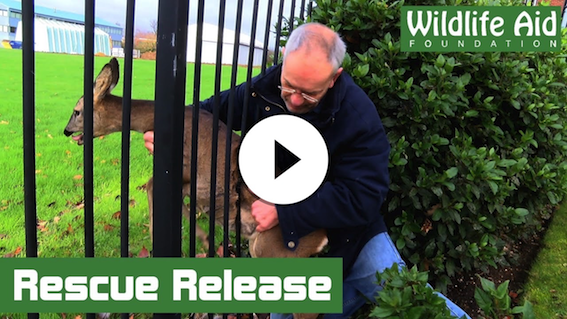
Featured YouTube: Freeing a Feisty Dear Stuck in a Fence in the UK |
|
|
|
|
|
|