|
|
Mid-South Coast Newsletter
April 2022 |
|
|
|
|
|
|
|
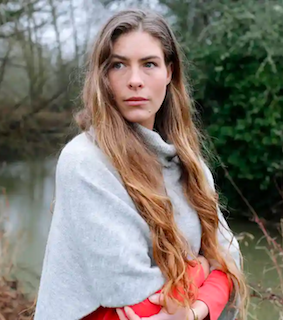
Photo: Hannah Bourne-Taylor by Stephen Burke/The Guardian |
|
|
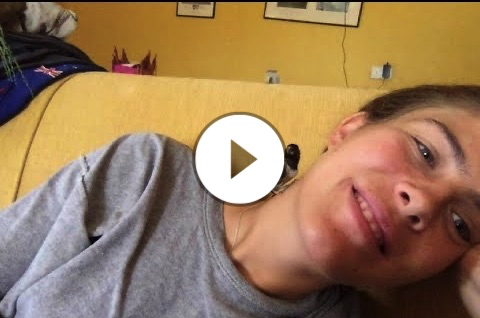
Video of the finch making a nest in Hannah’s hair. |
|
|
|
|
I Let a Baby Bird Nest in My Hair
Hannah Bourne-Taylor was living in Ghana in 2018 when she found a month old fledgling bronze-winged mannikin finch. It had been blown from a nest and abandoned. Hannah researched how to care for him and consulted an expert.
"For the next 84 days, the fledgling lived on me. We became inseparable. He would fly alongside me, or cling to me as I went from room to room in the house, while we walked the grasslands or when I drove. He’d rest in my hand. As he learned to fly, he’d make short flights from my hand, to my shoulder, to my head, then abseil down my waist-length hair to rest again…
"Each day, he made little “nests” in my hair, on the groove of my collarbone, which filled me with awe. He’d tuck himself under a curtain of hair and gather individual strands with his beak, sculpting them into a round of woven locks, resembling a small nest, then settling inside. He would allow it to unravel when he was done and start again the next day."
After his flock returned to the grasslands and he was flying confidently, her husband released the finch back to the flock.
Full story: Hannah Bourne-Taylor, Experience: I let a baby bird nest in my hair for 84 days, The Guardian, 25 March 2022.
|
|
|
|
|
|
|
|
|
|
Forestry Corp Fined for Mogo Logging
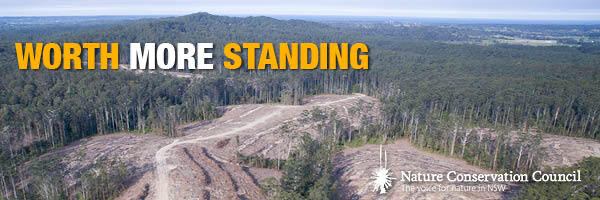
The NSW Forestry Corporation has been fined $45,000 for logging trees in Mogo State Forest that were habitat for threatened species such as powerful owls, greater gliders, gang-gang cockatoos and yellow-bellied gliders. The trees were also an important food source for the critically endangered swift parrots.
Contractors cut down over 70 mature habitat trees in 2020 after the summer bush fires, when wildlife was especially dependent on them for survival.
Coastwatchers Association alerted the Environmental Protection Authority (EPA) to the breaches. According to spokesperson Nick Hopkins: "The destruction of vital habitat trees so soon after the Black Summer bushfires was utterly appalling. Hollow bearing trees were scattered all over the forest floor like dismembered corpses."
Ref: Forestry Corp fined $45,000 for logging habitat trees in Mogo State Forest, The Beagle, 16 March 2022.
|
|
|
|
|
|
|
|
|
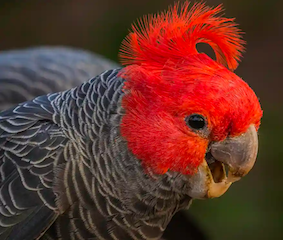
Photo: Gang-gang cockatoo by Jonathan Steinbeck/Getty Images/iStockphoto
|
|
|
|
|
Gang-gang Cockatoo Threatened
The gang-gang cockatoo was once commonly seen in Canberra and is the animal emblem of the ACT but it is now at risk of extinction. It has been officially listed as a threatened species as a result of bushfires and heatwaves due to climate change, which have reduced its numbers significantly.
According to Holly Parsons from Birdlife Australia:
“Even before the devastation of the 2019-20 fires, the species has been suffering immensely… With climate change only going to make things harder for this cold-climate bird, the government needs to step in and better protect this amazing bird and the native forests that provide essential nesting hollows in old growth trees.”
Ref: Lisa Cox, Gang-gang cockatoo to become threatened species after large drop in bird numbers, The Guardian, 1 March 2022.
|
|
|
|
|
|
|
|
|
Logging native forests is banned in Western Australia. "Victoria has set an end date. Queensland is ceasing it in two years. By contrast, the NSW government is still logging native forests. Taxpayers are being forced to fork out $441 for every hectare of native forest cut down.
"That's $20 million of public money each year to subsidise the destruction of the Australian bush.
"NCC [Nature Conservation Council] members started an official parliamentary petition to end native forest logging. If this petition gets 20,000 signatures it will trigger a formal parliamentary debate. By reaching this milestone, we will test the politicians on whether they will protect native forests in the lead up to the state election." |
|
|
|
|
|
|
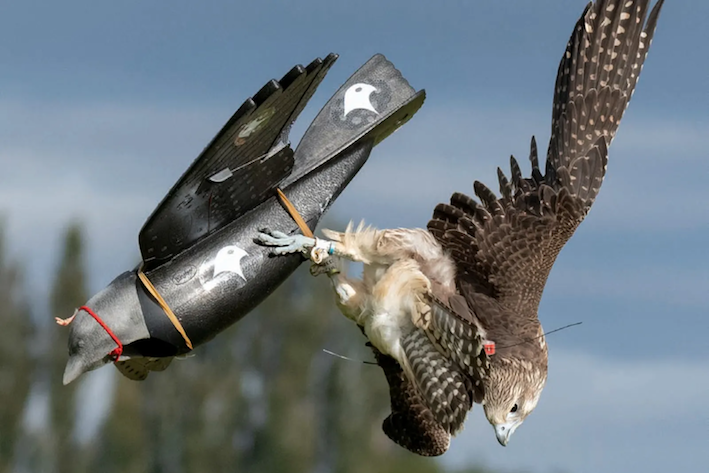
Robots Used to Train Birds of Prey |
|
|
|
|
|
‘Rocrow’ robotic bird used in the rehabilitation of gyrfalcon. Photo by Neil Davies. |
|
|
|
|
The gyrfalcon can sweep down on its quarry at up to 250km/h catching it in mid-flight. As part of a rehabilitation program for injured or orphaned birds in Western Australia, a robotic crow mimics the prey. This falconry technique used to teach raptors how to catch their prey is currently illegal in NSW. |
|
|
|
|
|
|
|
|
Pressure to Ban Kangaroo Exports
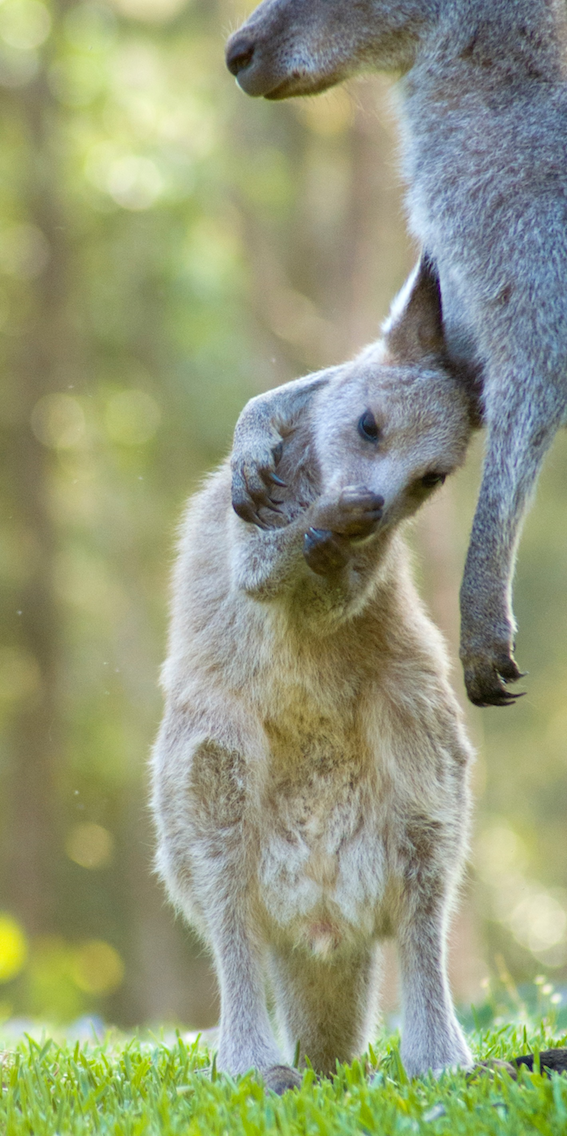
The largest export market for kangaroo meat and leather is the European Union. However animal rights activists, particularly in the Netherlands, are campaigning for a ban on the trade. They argue that the harvesting of meat and leather does not meet animal welfare requirements in the EU.
Of particular concern is the killing of joeys that cannot survive without their mothers, by blunt force trauma after their mothers have been shot.
"Scientists who support commercial kangaroo harvesting say that if Europe were to ban the import, it would remove the most humane method of kangaroo population management, leading to more animals starving due to overgrazing or more animals being killed through non-commercial culls, which are carried out by less-skilled shooters.
"But leading ecologists have also called for a national kangaroo strategy, which considers population management through the lens of managing the level of resources available in an ecosystem to support kangaroos, and not a quota based on how many animals the industry will take."
A ban on the import of kangaroo leather into the US has stalled in the US Congress.
Ref: Calla Wahlquist, Why is the EU under pressure to ban kangaroo products and how will it affect Australia? The Guardian, 20 March 2022.
|
|
|
|
|
|
|
|
|
Photo: Yellow Bellied Glider by National Geographic
|
|
|
|
|
Yellow Bellied Gliders in Broulee
In March Deb Stevenson, a local biologist with 20 years experience working with government on threatened species conservation, made a presentation to Eurobodalla Shire Council about its draft Policy for Conservation of the Yellow-bellied Glider in the Broulee Area. The policy was set in 2017 and the new draft leaves it “essentially unchanged”.
However Deb pointed out that since 2017 the bushfires have destroyed much of the habitat of the yellow-bellied glider. Moreover, the yellow-bellied glider "has subsequently been listed as vulnerable to extinction by the Commonwealth government under the Environment Protection and Biodiversity Conservation Act. This is not even acknowledged in the draft policy."
"The draft policy and the associated outdated 2009 Code of Practice urgently need to be reviewed and expanded to take account of this loss of habitat, as well as the likely impacts on the Eurobodalla Yellow-bellied Glider population. This would include a review of the minimum standards for development or activities that lead to clearing of land supporting suitable habitat for this species…"
Ref: Public Forum Presentation by Deborah Stevenson - Mar 22nd 2022, The Beagle, 22 March 2022.
|
|
|
|
|
|
|
|
|
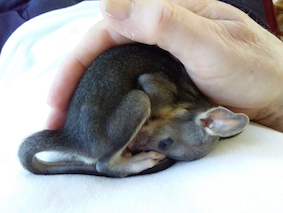
A full tum and a human tum to snooze on. Life is looking hopeful for Oscar, the brushtail possum joey.
|
|
|
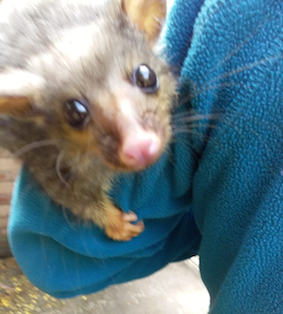
Oscar, two months later. Care and photos by Ray Brown.
|
|
|
|
|
What I learned from…
by Ray Brown
What I have learned from my encounters with possums over the
past couple of years since joining WIRES is:-
-
Young ringtails are cute, affectionate and
fairly friendly, though they do have teeth and claws to be aware of.
-
Young brushtails are like some alien creature
comprised of flailing arms and legs, all terminating in tenacious but not
malicious, blood-letting claws.
-
Some possums will lap their milk substitute
intermittently over their feeding time while others drink like a machine,
barely taking time to draw breath until the dish is clean. Some would even lick
the pattern off the dish if there was one.
-
Some possums will be very co-operative with
toileting (while assuming a very indignant look) while others simply refuse any
co-operation.
-
The temptation to shake or flick off a tightly
clinging and pain inflicting possum has to give way to gentle persuasion at
all times. Better to distract the possum by giving it something else to cling
onto, like a fleecy pouch or small towel.
-
Probably a good thing that I do not have the
facilities to care for a possum all the way to release; it avoids the
separation trauma (for me!)
PLEASE SEND ME CONTRIBUTIONS - Editor
|
|
|
|
|
|
|
|
|
Animal Behaviour During Floods |
|
|
|
|
|
|
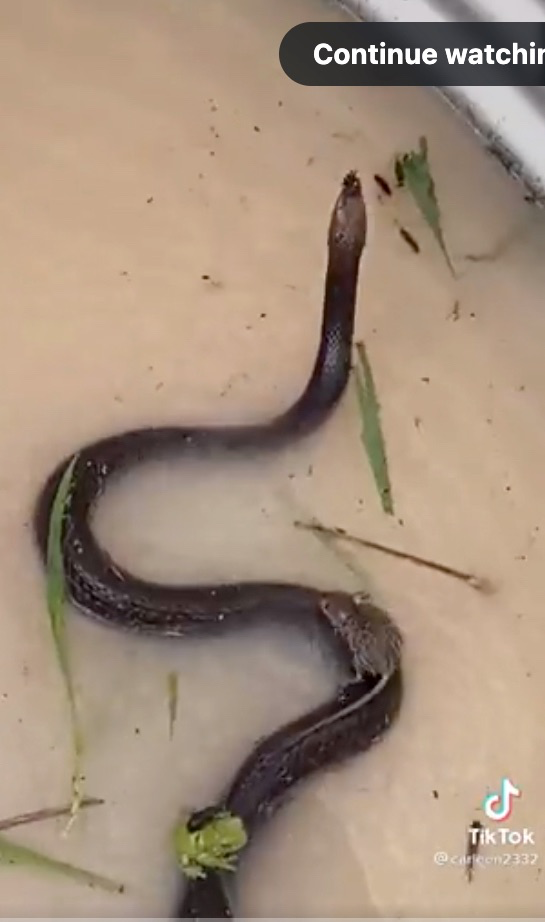
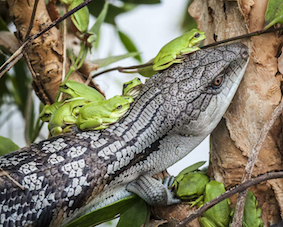
During floods when animals are trying to survive strange relationships might be forged. An eastern brown snake was rescued during the recent Queensland floods, along with frogs and rodents using the snake to stay afloat. Different species will also share refuges such as trees. Photo above by Damian Kelly.
Ref: Euan Ritchie and Chris Jolly, ‘The sad reality is many don’t survive’, The Conversation, 8 March 2022. |
|
|
|
|
|
|
|
|
Some Pics from WIRES Mid-South Coast |
|
|
Two wood ducks and a teal (top) raised by Natalie Moore, now grown and at Janelle’s, joining Grimm, the chestnut teal, for soft release. Photo by Janelle Renes. |
|
|
Bowie, Bindi and Willow, wallaby joeys, being soft released by Zora after being in care for over 7 months. Photo by Zora Brown. |
|
|
|
|
Yuki, ringtail possum joey, in care of Nalda before going to Olympia Hendry. Photo by Nalda Paterson. |
|
|
Wombat joeys in care of Lorita and Kevin Clapson. Photo by Jenny Wills-Smith. |
|
|
|
|
Ms Tinkerbelle, kangaroo joey in care of Natalie. Photo by Natalie Moore. |
|
|
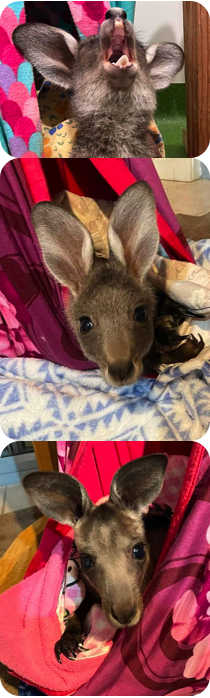
Obi (top 2) and Bodi, eastern grey kangaroo joeys, ready to move to new homes. Care and photos by Nalda Paterson. |
|
|
|
|
|
|
|
|
Notices
The rate at which members can have their car travel for rescues and wildlife transport reimbursed has increased to 40c/km. You will need to fill out a log sheet of your travel. See:
|
|
|
|
|
|
|
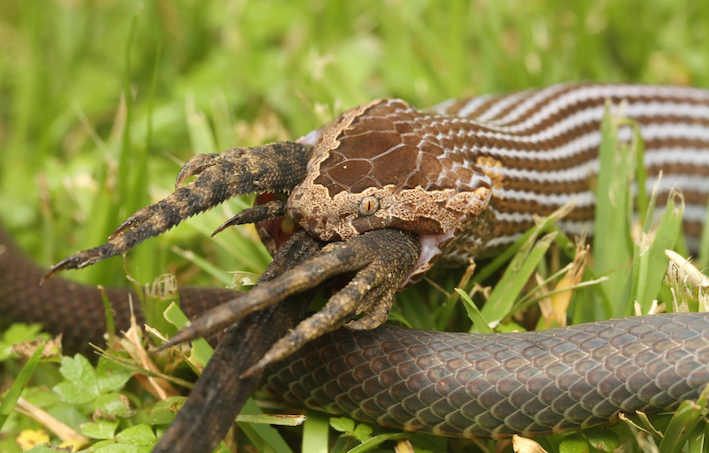
Golden crowned snake with more than a mouthful of water dragon on NSW central coast. Image credit: Peter Street |
|
|
|
|
|
|
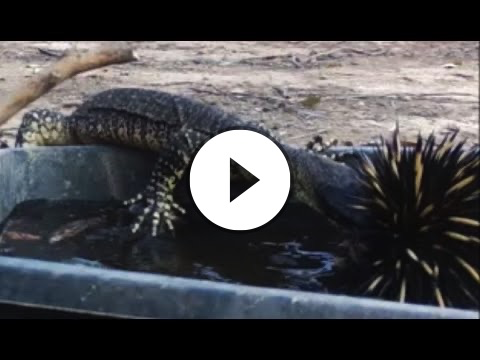
Featured YouTube: Goanna attacks swimming echidna
Don't you just hate it when a wannabe velociraptor interrupts your relaxing bath time? This young inexperienced echidna relaxes in the water for over an hour, even dozing off with his vulnerable underside exposed, until an opportunistic goanna (lace monitor) makes a grab. I don't really know what the goanna was thinking though - there is no way he could actually swallow an echidna and live to tell the tale. Eventually the goanna realises that grabbing an echidna is one thing, but holding onto it is quite another.
Story and video by Guba Na Nature Refuge. |
|
|
|
|
|
|