|
|
> |
|
|
Mid-South Coast Newsletter
September 2023 |
|
|
|
|
|
|
|
Photo: Pablo Porciuncula/AFP/Getty Images. |
|
|
|
|
Freak Snake and Hawk Attack
A Texas woman was mowing the lawn with her husband when a hawk flying overhead dropped a 1.5m long snake. The snake landed on her arm and wrapped itself around it. The more she tried to shake it off the tighter it squeezed her arm and it attacked her face, chipping her glasses and spraying her with venom.
To make matters worse the hawk kept landing on her arm in an effort to retrieve the snake. Its wings slapped her face and its talons tore into her arm as it tried to grab the snake. The woman was screaming “Help me, Jesus” and running towards her husband in a zig zag.
Finally the hawk flew off with the snake and the woman was taken to hospital where she was given antibiotics and bandaged up. Amazingly, the snake had not bitten her.
Ref: Erum Salam, Texas woman mowing lawn attacked by snake and hawk – at the same time, The Guardian, 9 August 2023.
|
|
|
|
|
|
|
|
|
Photo: Logging operations in the Tallaganda State Forest by Andrew Kaineder for WWF-Australia. |
|
|
|
|
Greater Glider Found Dead
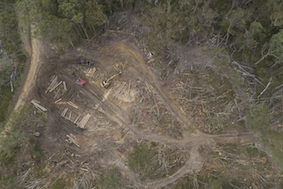
Logging in the Tallaganda State Forest south east of Canberra have been suspended for 40 days after a greater glider was found dead near logging operations. The suspension is to allow time for investigations.
Various groups, including WWF, Wilderness Australia and Greens MP Sue Higginson had lodged complaints about the logging by state government-owned Forestry Corporation, because the area is only one of two areas of habitat for the endangered greater glider that survived the black summer bushfires.
Forestry Corpoation is supposed to identify and protect greater glider den trees and place a 50 metre exclusion zone around them.
"Populations of the greater glider have declined by 80 per cent over the past 20 years due to logging, land clearing and bushfire."
Ref: Nick O'Malley, Logging in NSW forest suspended after an endangered greater glider found dead, Sydney Morning Herald, 30 August 2023.
|
|
|
|
|
|
|
|
|
|
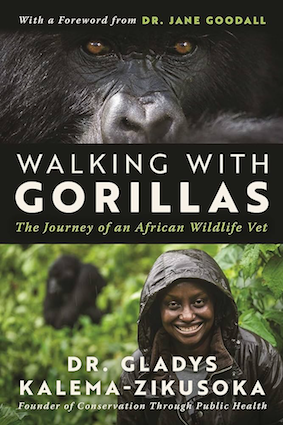
The Vet and Uganda’s Great Apes
When 26 year old Gladys Kalema-Zikusoka became Uganda’s first wildlife vet in 1996 there were only 300 Bwindi gorillas remaining. Today there are around 500 and the increase has been credited to her “gentle tenacity and impressive networking skills”.
"These majestic but shy creatures – whose existence now generates about 60% of Uganda’s tourism revenue – like to hide, especially when they know veterinary intervention is afoot. The gorillas are always outsmarting the humans – if they see someone carrying a dart gun (for sedation, vaccinations, medicine, etc), they’ll walk backwards so as not to expose their backs, where the dart needs to land. They also like to mock-charge at humans, stopping suddenly to indicate they mean no harm, yet leaving no doubt as to who holds the power."
The Bwindi mountain gorilla was only discovered in 1987 and became a tourist attraction. But as the gorillas lost their fear of humans they’d go into people’s gardens and catch human diseases. Also humans encroached on the forests causing loss of habitat and caught gorillas in animal traps.
One of Kalema-Zikusoka’s many interventions was to form Gorilla Guardians which used local volunteers to herd gorilla’s back into the national park. She also established volunteer health visitors to teach villages about hygiene and sanitation so gorillas wouldn’t get sick from rubbish heaps and fecal matter lying around.
Ref: Fleur Britten, Champion of the gorillas: the vet fighting to save Uganda’s great apes, The Guardian, 23 April 2023.
|
|
|
|
|
|
|
|
|
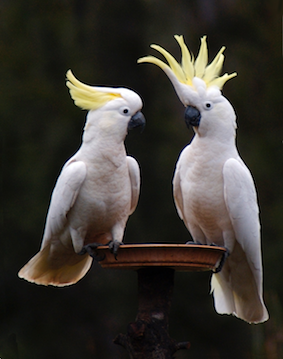
Photo of sulphur-crested cockatoos by Sharon Beder. |
|
|
|
|
Wild Bird Feeding During Lockdowns
Feeding wild birds is strongly discouraged by WIRES and other wildlife groups because it can cause:
However, feeding wild birds is also a way that people can connect with nature, which improves their mental health. During the COVID lockdowns there was a marked increase in bird watching and a surge in interest in wild bird feeding around the world. People feeding birds and watching them felt more personal worth and more peaceful.
For those who continue to feed wild birds it is important to minimise the risks by:
- keeping the feeder extremely clean (disease is always a concern)
- not putting out too much food (they don’t need it)
- providing food that is appropriate for the species (never human food – buy wild bird food from pet food companies).
Ref: Darryl Jones, Wild bird feeding surged worldwide during lockdowns. That’s good for people, but not necessarily for the birds, The Conversation, 3 August 2023.
|
|
|
|
|
|
|
|
|
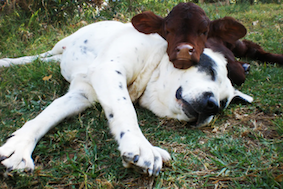
A Central Asian shepherd dog with a calf it guards. Photo by Elena Sweden. |
|
|
|
|
Preventing Dingo Massacres
Elena Swegen remembers the “night of the massacre” ten years ago when dingos attacked the sheep on her farm at Myall Lakes which borders a national park where the dingos live.
It happened on a rare occasion when their Central Asian shepherd dogs were away from the sheep. In the following years she had no further problems with dingos because she made sure the shepherd dogs were always with the sheep.
"She said the dingoes were an important part of the ecosystem, killing feral animals in the area and keeping control of native animal populations that compete for pasture with her herd of water buffalo.”
She says she would much prefer to have dingos around than cats, foxes and kangaroos.
"NSW National Parks and Wildlife Service said the agency was under a statutory obligation to control wild dogs, including dingoes. It did so through carefully targeting areas of highest risk, such as land near farms, and it left more remote areas unbaited."
Ref: Catherine Naylor, ‘The night of the massacre’: The gruesome scene that confronted farmer Elena, Sydney Morning Herald, 26 July 2023.
|
|
|
|
|
|
|
|
|
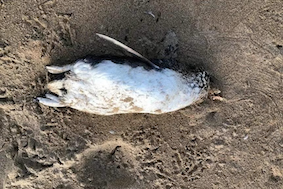
One of six dead little penguins found on Barlings Beach. Photo: Australia Seabird and Turtle Rescue |
|
|
|
|
Mysterious Seabird Deaths
Last month six dead little penguins (fairy penguins) were found at Barlings Beach, Tomakin. They had been decapitated.
Nicholas Carlile, a senior research scientist with the Department of Environment, analysed one of the dead penguins and said it was probably attacked by a fur seal. He said the head was the most nutritious part of the penguin.
Gannets
There have also been a large number of gannet deaths over the last few months from Currarong, near Jervis Bay, to Narooma. Australian Registry of Wildlife Health manager Dr Karrie Rose was sent one of the Currarong gannets. It was in perfect health but had wounds suggesting it had been attacked by a fur seal.
Lisa asks that anyone finding dead birds on the beach report them.
Ref: James Tugwell, Fur seals off NSW South Coast likely culprits behind beheaded little penguins and dead gannets, ABC South East NSW, 18 August 2023.
Silver Gulls
Two days after the penguin discovery, following a call out, WIRES MSC found 12 silver gulls dead or dying at Surf Beach. They appeared to have been poisoned. Lisa from Australian Seabird Rescue couriered a number of the dead bodies to Wildlife Health Australia in Sydney to investigate the cause of the deaths.
(Eds note: I contacted Eurobodalla Shire Council’s Environmental Services division to find out if there had been any sewage related incidents at the time as there is a sewage treatment plant and outfall nearby. My thinking was that thegulls might have been poisoned by a discharge resulting from someone flushing a toxic substance down the drain. The Council knew of no such incident but it is always worthwhile investigating this line of inquiry when there are mysterious marine animal deaths in the vicinity of a sewer outfall.)
|
|
|
|
|
|
|
|
|
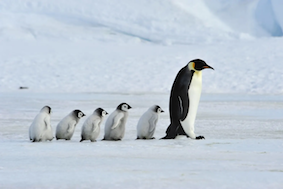
Photo: Emperor penguins chicks by SHUTTERSTOCK.
COM |
|
|
|
|
Emperor Penguin Chicks Die
Last spring ALL the emperor penguin chicks died in four colonies out of five in one area of Antarctica. The cause was global warming which has caused the lowest ever sea ice coverage.
The penguins have no predators but are now headed toward extinction because of human-induced climate change. The chicks are raised on sea ice that melted early and died by drowning or freezing before they were able to develop waterproof feathers.
Scientists had predicted chick losses as a result of sea ice melting but not the catastrophic loss of so many penguin chicks. The situation will get worse in subsequent years unless global warming can be stopped and this does not bode well for the future of the emperor penguins.
Ref: Laura Chung, Not a single emperor penguin chick survived spring in parts of Antarctica, Sydney Morning Herald, 25 August 2023.
|
|
|
|
|
|
|
|
|
|
Hot Summer Ahead
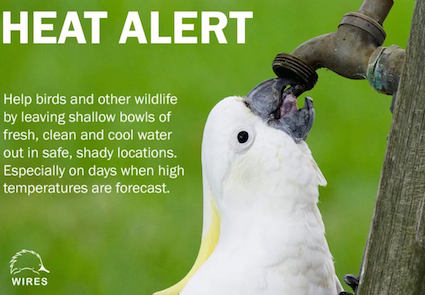
It is likely we are in for a hot, dry summer following deadly heat wave conditions in the northern hemisphere. An El Nino is likely to be declared soon in Australia.
|
|
|
|
|
|
|
|
Identifying a heat-stressed animal
- Birds may pant by opening their beaks, holding their wings out and away from their body.
- Heat stressed animals may appear confused and lethargic.
- Flying-foxes, possums, gliders, koalas may come to the ground or low to the ground during daylight hours.
- Kangaroos and wallabies may be lying down and not move away quickly if startled. They may also be seen salivating.
- Reptiles may seek refuge from the heat in cool, dark places to cool down.
- Severely impacted animals may suffer convulsions or lose consciousness.
- Some animals may also suffer burns on their paws from hot roofs and road surfaces.
More info: Heatwaves, WIRES, accessed 15 August 2023. |
|
|
|
|
|
|
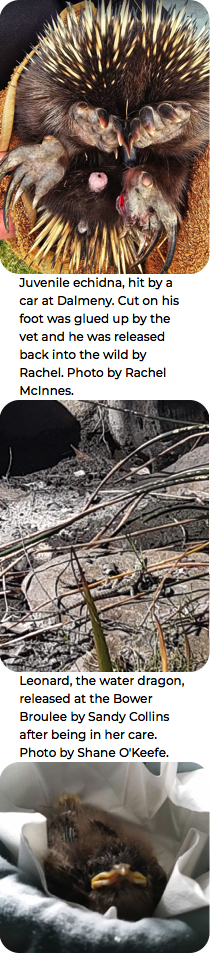
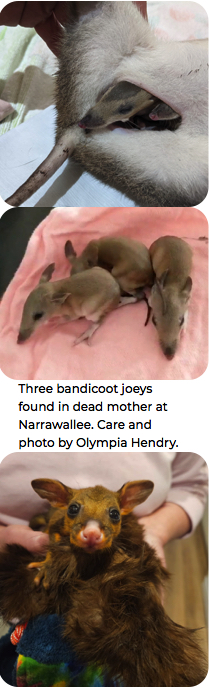
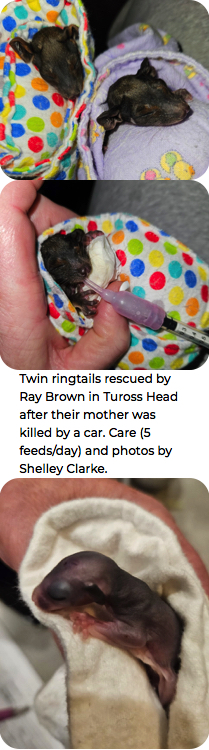
Some Pics from WIRES Mid-South Coast |
|
|
Red wattlebird chick, first chick of the season, rescued by Tricia Matthews. Photo by Janelle Renes. |
|
|
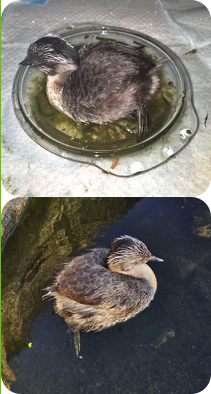
Hoary Grebe rescued, rested, tested and released on safe Bergalia dam by Rachel McInnes who said "They fly at night and often mistake a shiny roof for a body of water to land in. They are very awkward on land and often get called in as 'broken leg’." Photo by Rachel. |
|
|
|
|
Alfie, a male brushtail possum joey, 202g and 120 days old, rescued by Sheryl Steele and cared for by Sasha Ermichina before it was discovered that he was blind. Photo by Shelley Clarke. |
|
|
Tiny sugar glider joey transported by Jenny Willis-Smith from Batemans Bay vet and assessed by Debbie Ellis. Unfortunately he didn’t survive his head trauma. Photo by Shelley Clarke. |
|
|
|
|
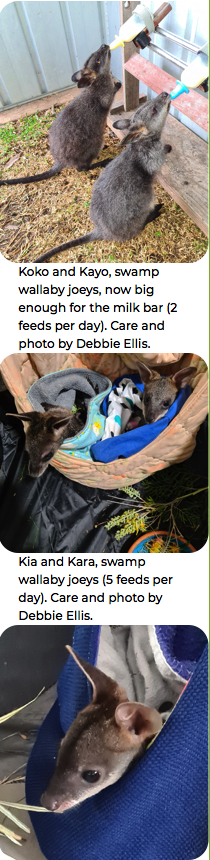
Kian, a fifth swamp wallaby joey being cared for by Debbie. Photo by Debbie Ellis. |
|
|
Ziggie, checking out his new digs at Wild2Free. Earlier care and photo by Lorita and Kevin Clapson. |
|
|
|
|
|
|
|
|
Notices
Branch General Meeting: Saturday 9 September upstairs at the Hotel Adelaide conference room, Moruya, commencing 10:30am - and also on Zoom. Lunch afterwards will be in the Bistro downstairs.
|
|
|
|
|
|
|
|
|
More Worm Farming Workshops
Worm farms are not only great for generating fertiliser for your garden but also worms for birds you might have in care. It is easy, takes little time, and utilises your kitchen scraps and garden clippings. The Eurobodalla Shire Council is again running workshops for residents. Those attending will get a free worm farm kit (normally costing over $100). Booking necessary.
Where: Moruya Waste Transfer Station,
21 Yarragee Rd, Moruya
Cost: Free to Eurobodalla residents
When: Friday 8 September 12-1.30pm
Saturday 9 September 12-1.30pm
Friday 15 September 9.30-11am
Saturday 16 September 12-1.30pm
Booking: Council Waste Services on 4474 1024
Link: Home Composting and Worm Farming |
|
|
|
|
|
|
|
|
|
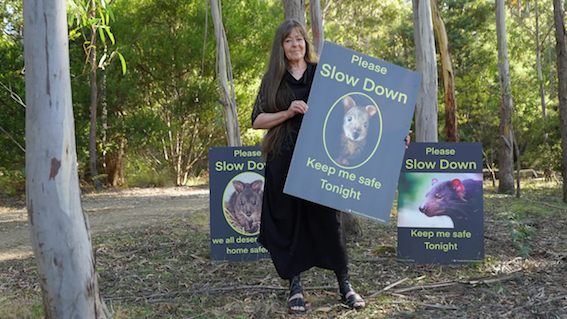
Documentary available on ABC iview (12mins): 400,000 animals are killed on Tasmanian roads every year. That's 45 every hour. Meet the women who have decided that enough is enough and are tackling this issue in unique and sometimes controversial ways.
|
|
|
|
|
|
|
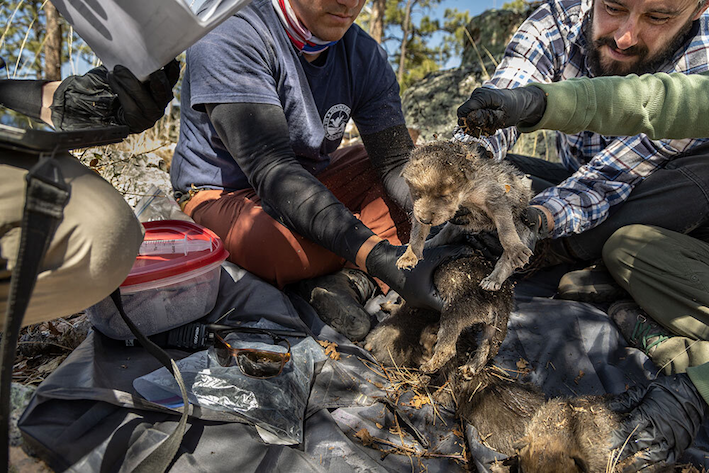
Your new home: Biologists (in the photo above) prepare to place a captive-born pup into a wild wolf den at the Gila National Forest in New Mexico. Known as cross-fostering, the practice is part of the reintroduction of Mexican wolves to the region. To ensure the wild mother “adopts” the pup when she returns, the biologists rub feces from her pups onto the newcomer so it smells like one of her offspring. |
|
|
|
|
|
|
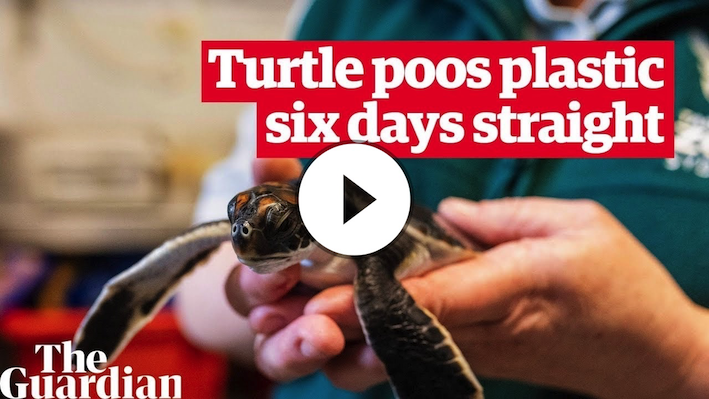
Featured Youtube: Rescued green turtle hatchling poos pure plastic for six days straight |
|
|
|
|
|
|
 /a>
/a>