|
|
Mid-South Coast Newsletter
November 2020 |
|
|
|
|
|
|
|
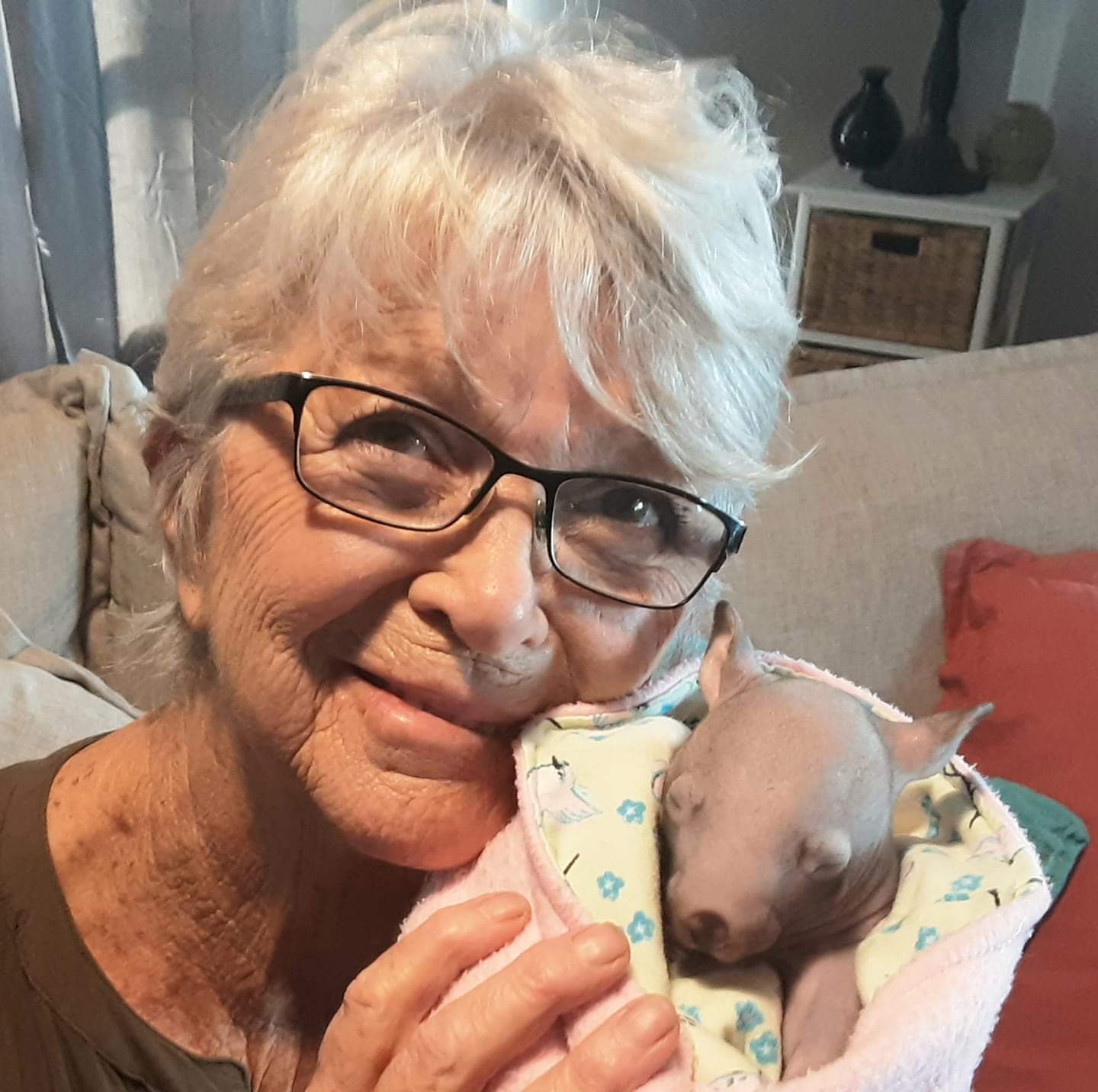
Nalda Paterson with Naked Nellie, the wombat joey, now in the care of Zora Brown (see photos below). Photo by Tim Horstead.
|
|
|
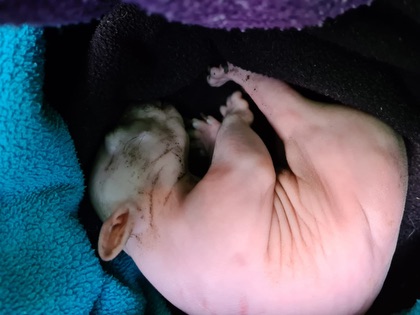
Bilbo the wombat joey in Nalda's care. Photo by Debbie Ellis.
|
|
|
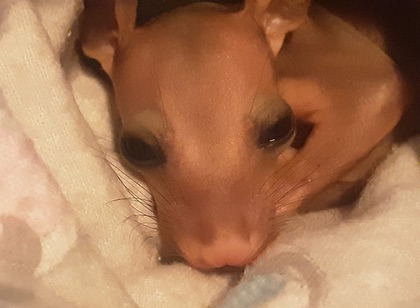
Frodo the brushtail joey in Nalda's care. Photo by Nalda Paterson.
|
|
|
|
|
Nalda Paterson from Kianga specialises in caring for very young kangaroos, wallabies, wombats, possums and gliders. Nalda cares for eastern grey kangaroo joeys from as little as 400g until they are about 2kg when she passes them on to another carer for the next stage of their growth.
Pinkies need to be fed every 3 hours. During the night Nalda stretches that to 4 hours as it can take half an hour to feed them. They also need to be moisturised a few times a day and kept in a humid environment, otherwise they can go blind. Although it is very time consuming, Nalda loves caring for the pinkies. She says the tiny creatures “melt my heart”.
During last summer's bushfires, Nalda had to evacuate to the local beach with 6 pouched fire-orphan joeys. Fortunately the fire didn’t come and she was able to return home to receive 3 more bushfire survivors over the following days.
Nalda would like to see more members of our branch take on this very rewarding task. If they are healthy when they come in for care, Nalda believes the pinkies have close to a 100% survival rate. This is because of the high quality milk formulas available these days as well as humidicribs to keep temperature and humidity just right.
Nalda suggests an informal workshop held for branch members that covers pinky care would be useful, covering things such as syringe feeding and toileting, so that rescuers are able to care for pinkies at least overnight.
|
|
|
|
|
|
|
|
|
|
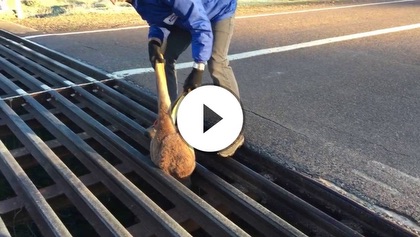
Kangaroo rescued from cattle grid in South Australia. Video: Jukin Media
|
|
|
|
|
Joey Rescued from Cattle Grid
On a rainy day in late October a call came in on XMatters for a kangaroo joey that was stuck inside a cattle grid in Moruya. A member of the public had reported that the joey was trapped in the cavity below the grid and couldn’t understand how it could have got in there as it is a concrete cavity with iron bars over the top of it that are 10cm apart.
Dave Clarke came to its rescue, reaching in and holding it by the tail and legs as he quickly lifted it out. The uninjured joey hopped straight back to its mother who was waiting anxiously nearby.
Dave has had experience with rescuing kangaroos and sheep form cattle grids. The property owner has decided to fill the cavity below the grill with gravel to prevent this sort of thing happening again. |
|
|
|
|
|
|
|
|
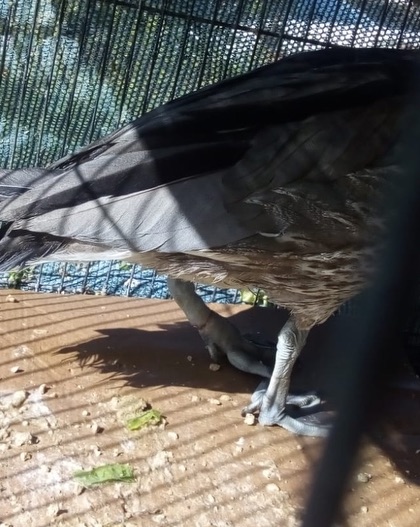
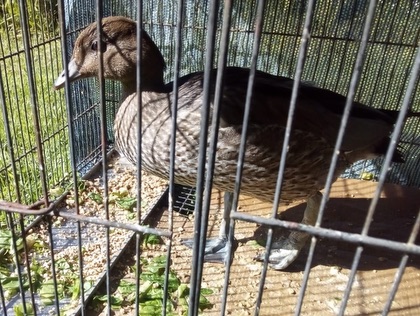
Slippery the Duck with injured leg and after being in care with Sandra for a week, just before release. Photos Sandra Dewhurst. |
|
|
|
|
Adventures of Slippery the Duck
by Caryn Norris
Young Slippery is a juvenile wood duck. The locals at Ingenia Caravan Park, Lake Conjola know the bird well. Caryn from our branch took an XMatters call to catch Slippery as he had fishing line wrapped tightly around one leg. His foot was badly swollen.
Caryn tried, unsuccessfully, together with many members of public, to corner Slippery and his friends so they could catch him. Two days later Caryn came back armed with two extras, Katie and Ben. They tried everything they could think of and Slippery still got away.
Determined to help Slippery they called in the cavalry and mustered up three more helpers. This time they had Caryn, Katie, Ben, Sandra, Stephen and Terry. They didn’t get the duck after a long and arduous attempt. So they asked the members of public to try to catch the duck when it came around their caravans.
In the meantime Sandra and Stephen were busy making a large D net to try the next time. Then Caryn got a call from a Caravan Park resident saying that Slippery had been caught by her husband Rick and was safely contained in a box. All Rick had to do was sit outside with a beer and peanuts in one hand and the upright fishing net close to the other hand. He tossed the peanuts near the net and when Slippery got close he flipped the net and caught Slippery. He then removed most of the fishing line. Thanks Rick!
Caryn picked up Slippery and took him to Ulladulla Vet. Slippery was finally relieved of the last of the fishing line and sent home with Sandra Dewhurst for some tender loving care for a few nights before Sandra released Slippery back to his home.
A wonderful outcome! Amazing teamwork and fantastic help from members of public have led to success. Thanks to everyone involved. |
|
|
|
|
|
|
|
|
New Wombat Enclosure
by Zora Brown
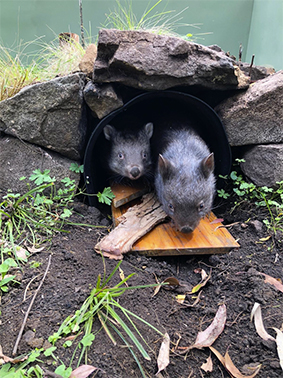
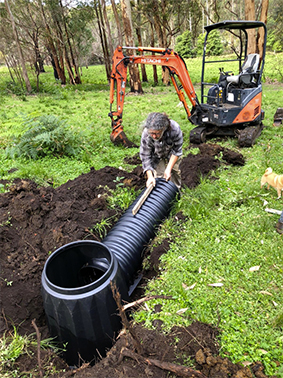
In October wombat joeys Willow and Neddie finally moved to their new wombat enclosure at Bawley Point.
The enclosure was fully funded by donations raised by Oaks Ranch at Mossy Point during the bushfires.
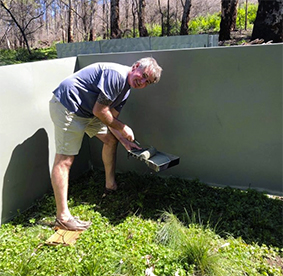
Our wonderful wombat coordinator Tony de la Fosse (pictured below) organised the manufacturing by Fearfab, the transport, payment and even two mornings helping to paint!
A big thank you also to my husband Scott, Richard from WRSC (Wildlife Rescue South Coast), and local plumber Paul for excavations.
Neddie had had a serious injury and osteomyelitis (infection in his right hind knee bone). After 6 weeks of antibiotics he is now good to go, thank goodness. |
|
|
|
|
|
|
|
|
|
|
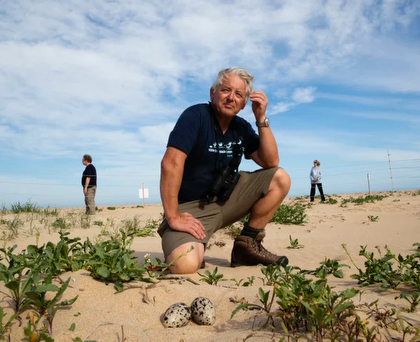
John Perkins, long-time volunteer protector of bird nests at South Durras. Photo by Janie Barrett.
|
|
|
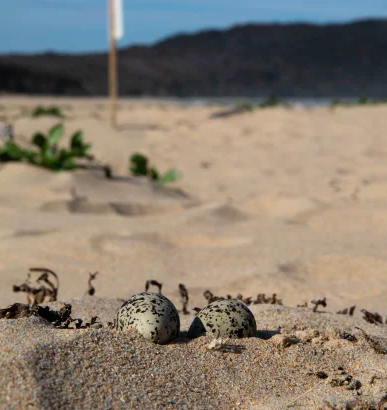
Photo: Pied oystercatcher eggs on South Durras beach by Janie Barrett.
|
|
|
|
|
Bird Recovery Program at Risk
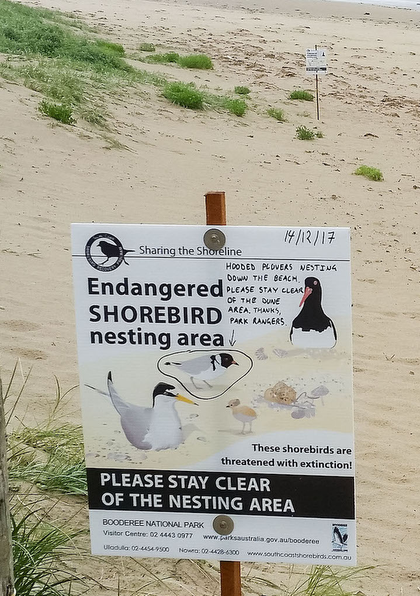
The successful South Coast Shorebird Recovery Program set up in 1999 has had its funding cut. The program relies on volunteers but is coordinated by staff from the National Parks & Wildlife Service. Funding for Jodie Dunn, who covers the South Coast area from Wollongong to Batemans Bay is to be cut in February next year.
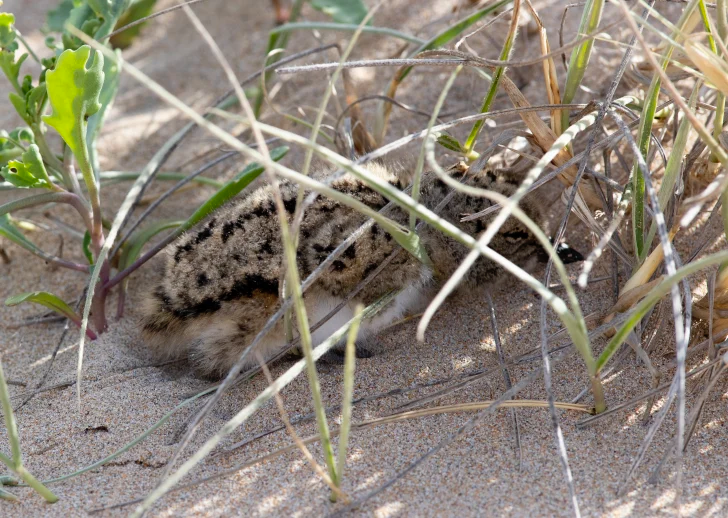
The program has successfully protected endangered species including the pied oystercatchers (only 200 breeding pairs left in NSW) and hooded plovers. For example, pied oystercatchers tend to lay their eggs on top of small mounds (see photo left) and they take five weeks to hatch. During that time they can be trampled on. Even after they hatch, the chicks cannot fly for another five weeks and are vulnerable to predators such as foxes. |
|
|
Photo: Pied oystercatcher chick by Janie Barrett.
|
|
|
About 80 volunteers spend about 3000 hours a year putting up electric fencing, barriers and signs to keep the eggs and chicks safe. But the work requires coordination and resources. The public has been asked to leash their dogs when walking these beaches and keep to the wet sand.
Ref: Peter Hannam, 'Devastating blow': Long-running bird conservation program at risk, volunteers say. Sydney Morning Herald, 17 October 2020.
|
|
|
|
|
|
|
|
|
|
|
Puggle Survives Attack
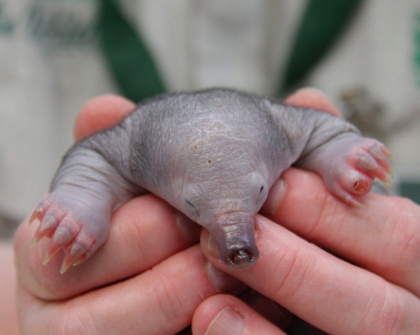
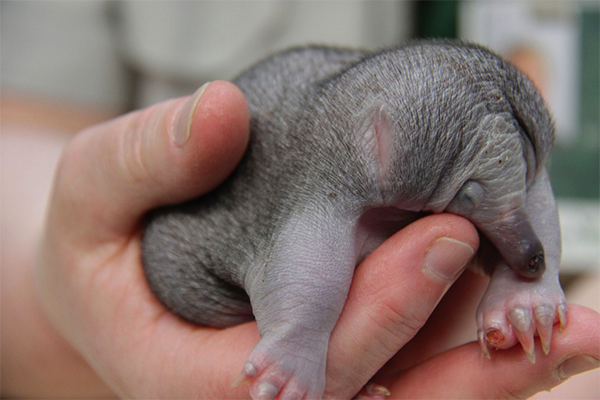
A baby echidna, or puggle, survived a fall of around four metres on the Central Coast before being taken to Taronga Wildlife Hospital. It is thought it was taken from its burrow by a bird of prey. It had scratches on its back and was found beneath a branch with a raven and a magpie on it.
"Senior Keeper Sarah Male will now spend the next few months giving the puggle a feed of specially formulated echidna milk formula and a bath before it returns to its burrow for its 48 hour sleep cycle." |
|
|
|
|
|
|
|
|
Norma Henderson's Books and Rehabilitation Manuals |
|
|
|
|
|
|
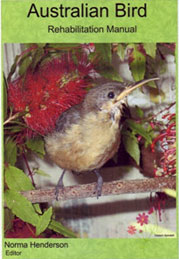
Norma Henderson, Australian Bird Rehabilitation : A Manual for Wildlife Carers, 2018, 185pp, $25+postage.
Long-time WIRES member Norma Henderson was initially asked to compile this manual for WIRES carers and rescuers in 1995. Since then she has "greatly expanded and regularly updated it”. Although it is no longer an official WIRES manual, it is still used by many WIRES members and some WIRES branches, as well as other wildlife groups around Australia, as an extremely handy and practical quick reference guide.
This informative manual covers more than 60 species of bird and is laid out in an easy-to-use format. Rescuers and carers just have to look up the bird species they are interested in, in either the contents or the index, to find essential information about rescuing, feeding, housing, rearing and releasing that species as well as problems, injuries and diseases common they might find. |
|
|
|
|
|
|
|
|
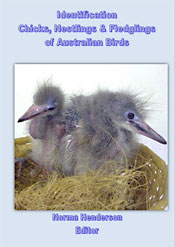
Norma Henderson, editor, Chicks, Nestlings & Fledglings of Australian Birds: Identification and Care, 2018, $25+postage.
There are many books on identifying birds, but they can be useless when it comes to identifying chicks that look nothing like adult birds. Norma Henderson’s manual fills that gap. It includes over 200 colour photos of chicks, nestlings and fledglings of Australian birds, as well as additional black and white photos. They show birds at various ages. The manual also aids identification by enabling carers to use beak, eye, foot and leg shape, colouring, weight, feather and nest type to identify the species and the age of the chick.
At the end of the manual, Norma includes a section on reuniting chicks with their parents, feeding and caring for them and releasing them.
The manuals can be ordered online here. Norma’s downloadable documents and presentations on small mammals and birds are also helpful. |
|
|
|
|
|
|
|
|
|
Eurobodalla Shire Nestboxes
With the help of a WIRES grant, Eurobodalla Shire Council has been supporting local community groups and landholders to build, paint and install hundreds of nest boxes to help wildlife impacted by the bushfires.
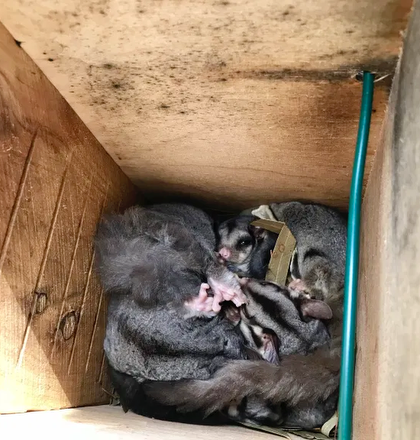
The Narooma Mens Shed has built many of them and local Landcare volunteers have painted them to make them weatherproof. There are different designs for various species including birds and small gliders.
Courtney Fink-Downes from the Council says: “There are still nesting boxes available for rural landholders who have either unburnt bushland near burnt areas, or have burnt bush where wildlife are starting to return.”
Ref: Wildlife more at home in custom nest boxes, Eurobodalla Shire Council, 26 October 2020. |
|
|
|
|
|
|
|
|
|
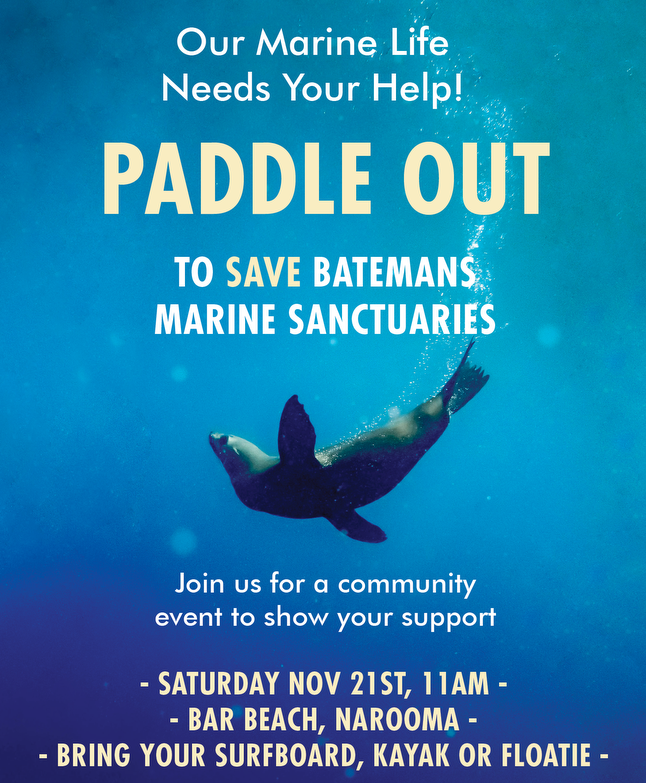
Marine Park Status at Risk
According to documents obtained under Freedom of Information Laws, National Parks and the International Union for Conservation of Nature (IUCN) are concerned about the weakened sanctuary status of Montague Island.
At the end of last year, fisheries minister Adam Marshall opened marine park sanctuaries to recreational fishing without scientific studies of the impact and without consulting either the public nor the Batemans Marine Park Advisory Committee. |
|
|
|
|
|
|
|
Dr Joanne Wilson, a senior parks policy officer wrote: "Opening up the sanctuary zones in the marine park to line fishing, netting, and taking bait will remove all areas of refuge and breeding for fish that then spill over to other areas, and cause a reduction in the health and resilience of the marine ecosystems around Montague Island” . The IUCN wrote that extraction of fish would affect the availability of food for seabirds.
Ref: Peter Hannam, 'Worrying sign': Rollback of protection puts marine park status at risk, Sydney Morning Herald, 20 October 2020.
|
|
|
|
|
|
|
Some Pics from WIRES Mid-South Coast
|
|
|
|
|
|
|
|
|
|
|
|
Notices
The following people were elected at our branch AGM in October:
Branch Management Committee Executive:
|
|
|
|
Other Positions:
-
WIRES State Council Rep: Julie Mills
-
Branch Purchasing Officer: Beris Jenkins
-
Fund Raising Officer: Alexandra Mail
-
Newsletter Officer: Sharon Beder
- Education Officer: Jan Sheehan
|
|
|
The following people were appointed by the Executive:
Species Coordinators:
-
Macropods: Beris Jenkins
- Wombats: Tony de la Fosse
- Bats: Janet Jones
- Possums & Gliders: Deborah Ellis
- Small Mammals: Sandy Collins
- Birds: Rachel McInnes & Janelle Renes
- Raptors: Sandy Collins
- Reptiles & Amphibians: Kay Mallitt
|
|
|
|
|
|
|
|
|
WIRES 2021 Calendars
WIRES 2021 calendars can now be ordered for $10 each. They would make a great Christmas present. To order a calendar (or multiple calendars) please email Tony de la Fosse at Tony.delafosse@iinet.net.au by 12 November. Tony will place a bulk order for the branch.
|
|
|
|
|
|
|
|
|
|
|
|
Food Subsidy
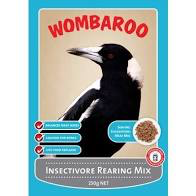
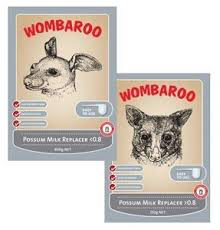
WIRES is currently offering 100% subsidy for a variety of animal and bird food. The types of food that are subsidised have recently been expanded. The full list can be downloaded here. Normally this subsidy is 50%.
Food that is available from Cooinda Downs can be ordered from Beris Jenkins. A list of products with prices can be downloaded here.
For other other subsidised food items not on the Cooinda Downs list above, members should ensure the purchase is supported by the Species Coordinator before purchasing the item and then send a copy of the receipt together with their account details to the treasurer, Tony de la Fosse, for reimbursement.
|
|
|
|
|
|
|
|
|
|
|
|
WIRES Online Shop
WIRES Head Office has recently launched a new online shop. The current list of available items is here. Our branch Treasurer, Tony de la Fosse, can place orders for you.
While most of these items are ‘corporate’ in nature there are some items that MSC members may be interested in, particularly car magnets. While generally payment of items is the responsibility of each member, the Branch will fund the cost of one set of car magnets for active rescuers. To request the car magnets please email Tony de la Fosse at Tony.delafosse@iinet.net.au
|
|
|
|
|
|
|
|
|
|
|
|
Worm Farming Workshops
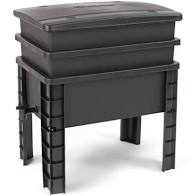
Worm farms are not only great for generating fertiliser for your garden but also worms for birds you might have in care. It is easy, takes little time, and utilises your kitchen scraps and garden clippings. The Eurobodalla Shire Council is running workshops for residents and those attending will get a free worm farm kit (normally over $100).
Where: Moruya Waste Transfer Station
When: Friday 13 Nov 12-1.30pm, or
Saturday 14 Nov 12-1.30pm, or
Friday 20 Nov 9.30-11am, or
Saturday 21 Nov 12-1.30pm
Booking: South Coast Colleges on 4472 9202
Link: Perfect pets with prodigious poo
|
|
|
|
|
|
|
|
|
|
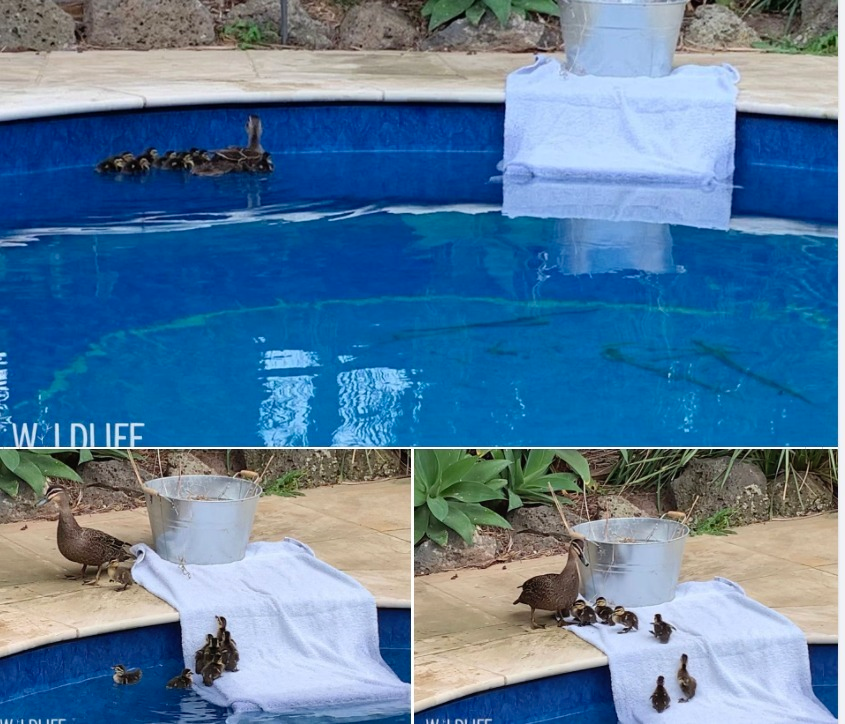
Helping a duck family out of a swimming pool: "Flat piece of polystyrene with towel on top, weighted down so can't blow away and Bob's your Uncle!” - Wildlife Victoria Facebook page, 26 October 2020.
|
|
|
|
|
|
|
|
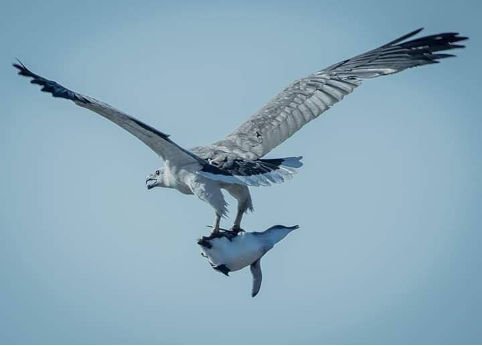
Winner of the Peoples’ Choice Award, Atlas of Life, Vision 2020 Photographic Exhibition by Peter Harris
|
|
|
|
|
|
|
|
Can You Solve the Mystery? Australian Museum.
|
|
|
|
|
|
|
|