|
|
Mid-South Coast Newsletter
August 2023 |
|
|
|
|
|
|
|
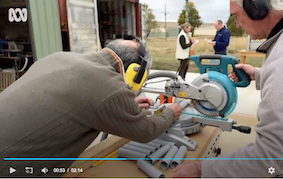
Cooma men’s shed making burrows for dragons. Screenshot from video. |
|
|
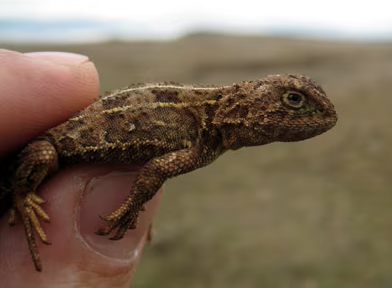
Photo: Monaro Grassland Earless Dragon by Tim McGrath. |
|
|
|
|
Men’s Shed Makes Burrows
The Cooma men’s shed are making artificial spider holes for the endangered Monaro grassland earless dragon to use.
The dragon is only found between Cooma and south-west Nimmitabel and its habitat is under threat. The NSW Department of Planning and Environment (DPE) is hoping to install some 400 of these burrows by December this year.
"Landholders are being encouraged to help protect the dragon by retaining areas of native pasture and managing weeds on their property.
The DPE is also encouraging anyone who has sighted the dragons on their property to contact them at monaro.dragon@environment.nsw.gov.au"
Ref: Adrian Reardon, Man-made men's shed burrows help endangered grassland earless dragon in Snowy Mountains, ABC South East NSW, 15 May 2023.
|
|
|
|
|
|
|
|
|
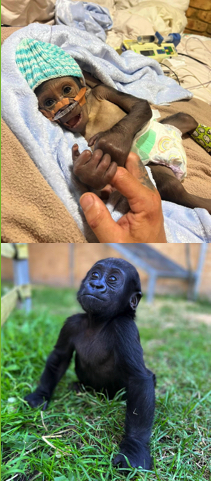
Photos: Kaius, a gorilla baby in care at Mogo Zoo, by Chad Staples. |
|
|
|
|
Kaius, the Gorilla Baby
Kaius, a western lowland gorilla, was born at Mogo Wildlife Park in 2022 but his mother needed emergency surgery and afterwards rejected Kaius. Kaius was sick and then got pneumonia and had to have antibiotics, be hooked up to oxygen and fed through nasal tubes.
Once he recovered from the pneumonia, zookeeper Chad Staples had to act as his mother. “Thankfully I’ve had babies, so they were great practice, and I’ve hand-raised many different species. I was as equipped as I could possibly be, though nothing prepares you for it.” For the first six weeks Kaius had to be fed every 2 hours.
After nine months, Kaius was prepared for the move back with other gorillas by putting him in an enclosure with a surrogate mother for periods of time.
Updates and very cute videos of Kaius growing up can be found on Chad’s Facebook Page
Ref: Claire Sans, Kaius the gorilla returns to (pri)mates after rough start to life, About Regional, 12 July 2023.
|
|
|
|
|
|
|
|
|
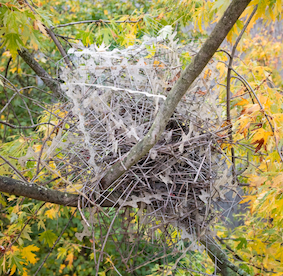
Photo: Eurasian magpie nest made from anti-bird spikes by Auke Florian Hiemstra. |
|
|
|
|
Nests Made From Anti-Bird Spikes
Eurasian magpies normally build their nests from thorny branches to protect their chicks from predators. However recently some are finding that anti-bird spikes are a great alternative.
In urban areas in Europe there is an "entire industry of products designed to keep birds off human infrastructure, such as light displays, netting, and even sharp metal spikes”. However birds are treating these metal spikes as source material for their nests.
"In the Netherlands, two instances so far show that carrion crows coiled the strips so that the spikes faced inward, possibly serving as a base for the nest and helping to bind other nesting materials, such as twigs and dry leaves.”
In contrast the eurasian magpies use the spikes as a protective cover for their nests with the spikes pointing outwards.
Ref: Jason Bitten, 'The perfect revenge'? Birds are building fortresses from anti-bird spikes, National Geographic, 18 July 2023.
|
|
|
|
|
|
|
|
|
Photo: Glide poles along the Hume Highway near Holbrook by Brendon Taylor. |
|
|
|
|
How did the Glider Cross the Road?
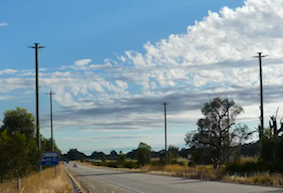
Glide poles that help gliders cross the road are an Australian invention. "These tall timber structures, with timber cross arms near the top, give gliders a way to cross big roads. They can shimmy up a pole on one side of the road and then leap to another (and another) to get to the other side.”
The glide poles are a substitute for tall trees and were first trialled on either side of a powerlines easement across Bomaderry Creek near Nowra in the 1990s. However the poles were not monitored for their effectiveness at the time.
Ten years later trials in Brisbane proved that gliders were using the glide poles. They are now used on highways in Victoria, NSW and Queensland. Gliders, including squirrel, sugar, feathertail, yellow-bellied and southern greater gliders have been recorded using the glider poles.
Ref: Brendan Taylor, Glide poles: the great Aussie invention helping flying possums cross the road, The Conversation, 24 July 2023.
|
|
|
|
|
|
|
|
|
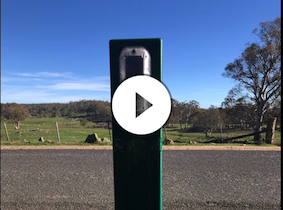
YouTube of virtual fencing operating.
|
|
|
|
|
How Does Virtual Fencing Work?
When car headlights are detected by the virtual fencing device, it emits a high-pitched sound and flashing blue lights (see video). The aim is to alert animals to the approaching car without startling them. Car headlights often startle and daze wildlife rather than turning them away.
The devices are 25 metres apart on alternating sides of the road and as a car approaches they are triggered in sequence forming a virtual fence. The basic model detects the headlights of cars 300m away and they are turned off during daylight hours. Newer models can be turned on during the day and are triggered by the sound of motorcars as well as car headlights.
Virtual fencing is used in 40 locations around Australia and 30,000 devices are installed around the world, including a local trial at Long Beach that seems to be having some success (see November 2022 issue of this newsletter).
Ref: ‘What is Virtual Fencing’, Wildlife Safety Solutions, accessed 21 July 2023.
|
|
|
|
|
|
|
|
|
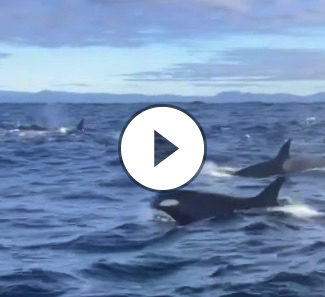
Massive orca pod spotted off the coast of Batemans Bay
|
|
|
|
|
Orca Whales at Batemans Bay
A large pod of killer orca whales surrounded Jayde Theodore’s boat when he was tuna fishing with his cousin about ten nautical miles east of Batemans Bay last month. He estimated there were 50 to 100 of them, ranging in size from 1.5 m to 7.5 m long.
“They were really active and jumping right out of the water. One popped up right next to the boat and turned on its side and was looking up at me – I was in awe really. In 23 years, I’ve never seen a killer whale before.”
The whales have been identified as Antarctic Type C killer whales (also known as Ross Sea killer whales). This is a rare event. It is only the seventh time these whales, which normally inhabit pack ice off Antartica, have been recorded in Australian coastal waters. They are known to migrate to and from NZ.
Ref: Katrina Condie, Watch as anglers encounter a huge pod of rare killer whales off Batemans Bay, About Regional, 27 July 2023.
|
|
|
|
|
|
|
|
|
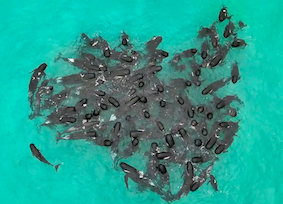
Whales gathered closely just off Cheynes beach before being stranded. Photograph by WA Department of Biodiversity, Conservation and Attractions. |
|
|
|
|
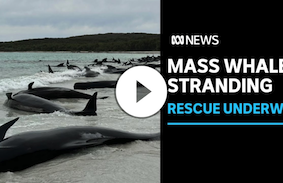
Mass Whale Stranding in WA
Almost 100 long-finned pilot whales gathered in a tightly packed group offshore before stranding on Cheynes beach east of Albany, WA. This strange behaviour cannot be explained by whale experts who can only guess at the causes.
One theory is that whales form such a tight knit social group that when one is sick and disoriented the others stay with it. Another theory is that some sort of sound such as submarine sonar has disrupted their internal navigation systems.
Overnight over 50 of the whales died and volunteers, scientists and government staff fought to save the rest. Dozens of people took turns to support the 100kg whales in the freezing cold water.
"Local volunteer Kaysanne Knunckey said she was waist-deep in the ocean from 7.30am until after 11am – pulling the live mammals back into the water and supporting them with the help of a sling."
Unfortunately the whales that were towed back into deeper water returned to the beach and the remaining whales had to be euthanised.
Ref: Narelle Towie, ‘We have never seen this’: scientists baffled by behaviour of pilot whales before WA mass stranding, The Guardian, 26 July 2023.
|
|
|
|
|
|
|
|
|
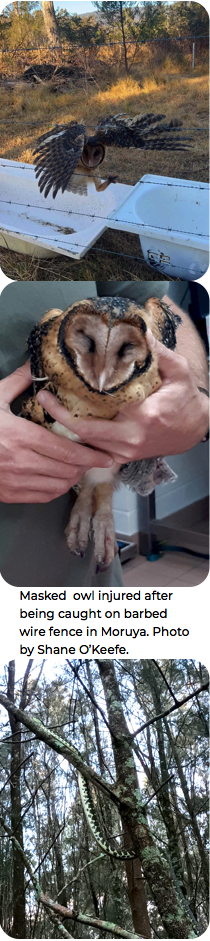
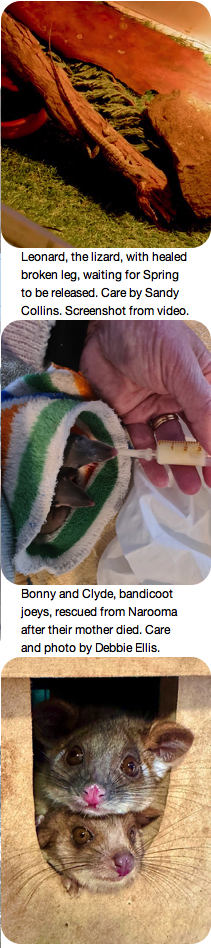
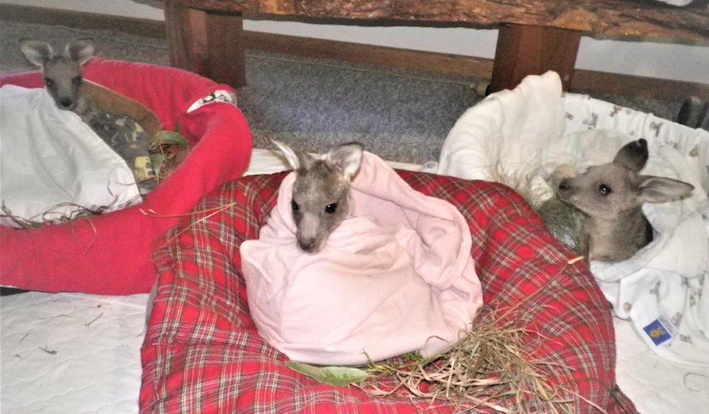
Some Pics from WIRES Mid-South Coast |
|
|
Diamond python from Bawley Point relocated by Kylie to nearby bushland. Photo by Kylie Lopes. |
|
|
|
|
Ringtail possum joeys, Pikachu and Pickles, prior to release, care by Abby McCarthy, Sheryl Steele and Renate. Photo by Renate Cooper. |
|
|
|
|
Kangaroo joey, Zali, enjoying the sun. Care and photo by Zora Brown. |
|
|
|
|
|
|
|
Kangaroo joey lounge. Care and photo by Beris Jenkins. |
|
|
|
|
|
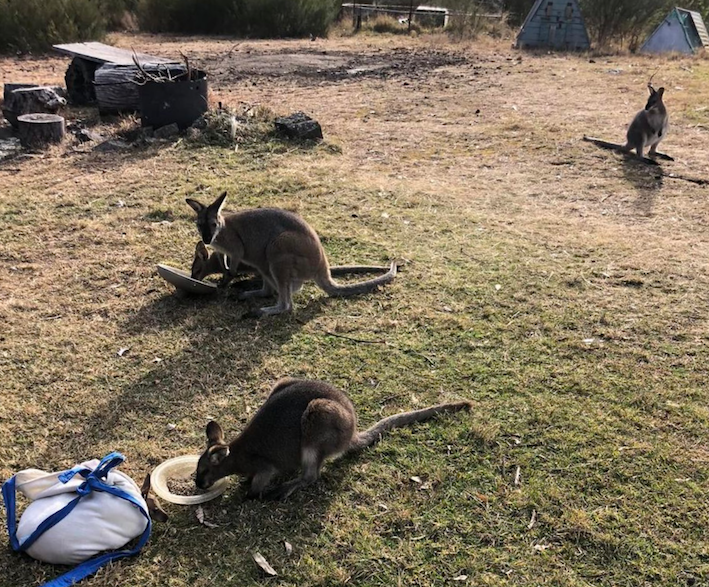
Rednecked wallabies Flossie (with joey on board), Bindi, Ruby, Opal. Care and photo by Zora Brown. |
|
|
|
|
|
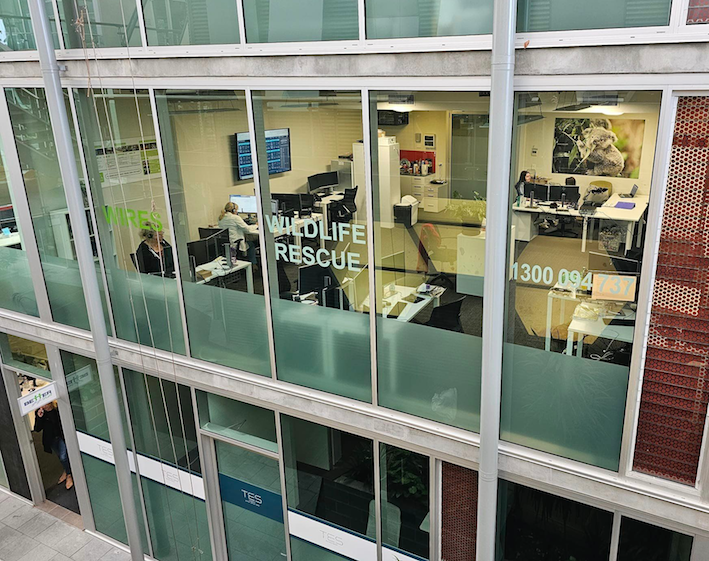
WIRES rescue call centre in Sydney. Photo by Rachel McInnes. |
|
|
|
|
|
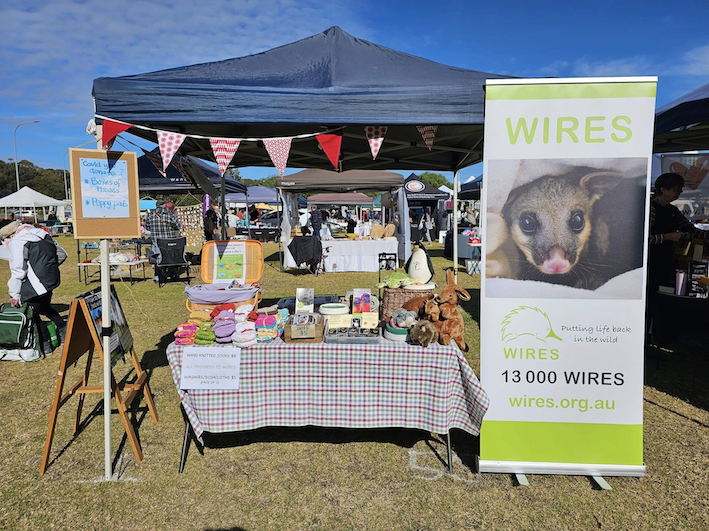
WIRES Narooma market stall. Photo by Rachel McInnes. |
|
|
|
|
|
|
|
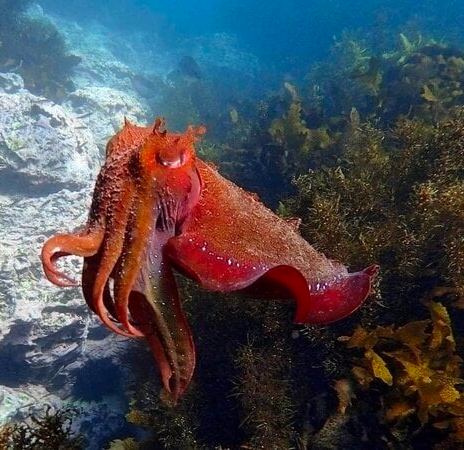
Ban Spearing Giant Cuttlefish in NSW
Giant cuttlefish (Sepia apama) are one of the most beautiful and charismatic of the cephalopods. They are native to Australia and are the largest cuttlefish species in the world, growing up to 1m. They are rated as ‘Near Threatened’ by global authority on conservation status, IUCN, meaning they are at risk of becoming endangered.
We call for a moratorium on the spearfishing of giant cuttlefish in the area from Palm Beach to Wollongong, though preferably this could be applied along the whole NSW coast. The ban would apply within 1km of the coastline. |
|
|
|
|
|
|
|
|
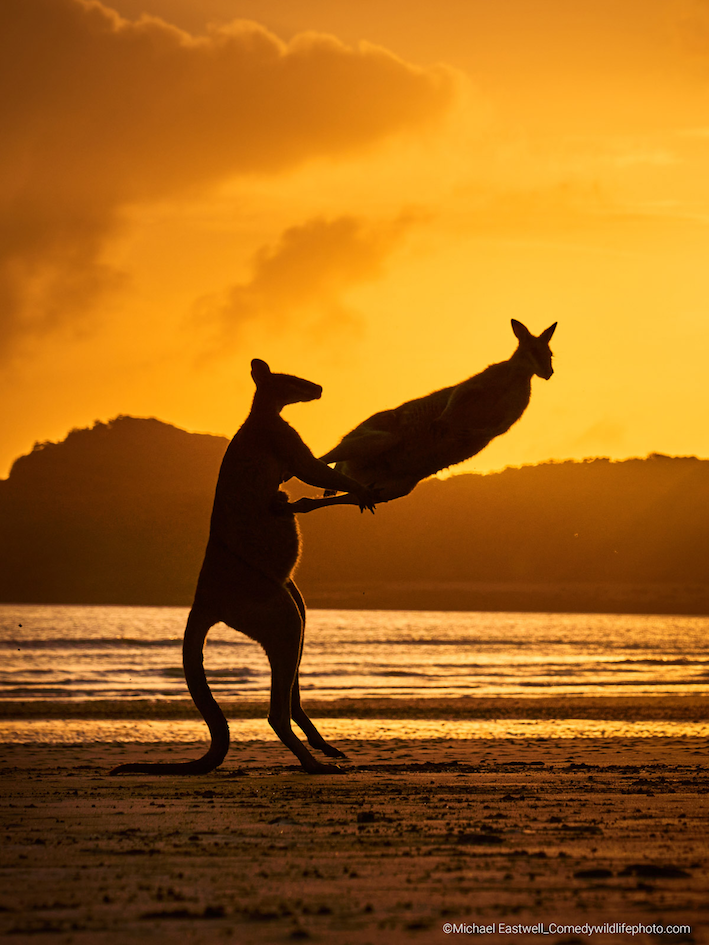
© Michael Eastwell / Comedy Wildlife 2022. |
|
|
|
|
|
|
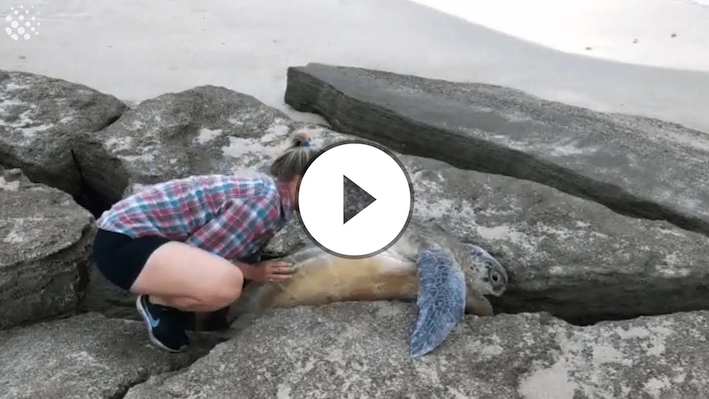
Featured Youtube: 160kg green sea turtle trapped between rocks and rescued |
|
|
|
|
|
|