|
|
Mid-South Coast Newsletter
April 2021 |
|
|
|
|
|
|
|
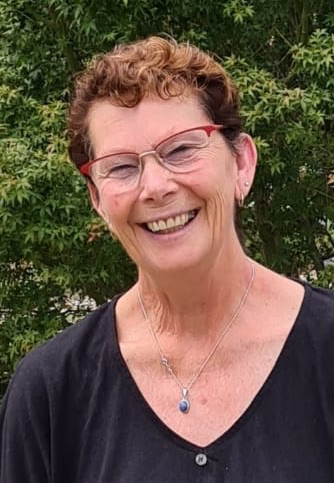
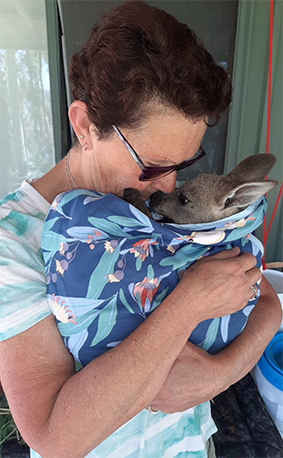
Debbie Ellis. Photos by Graeme Ellis and Shelley Clarke. |
|
|
|
|
Debbie, Our Possum Coordinator
Debbie Ellis has always loved animals. When she was a child she was constantly bringing home stray animals to look after.
In her working career, Debbie spent 20 years with the Department of Education looking after children with special needs, especially asberger's syndrome, mainly at Narooma High School. Nowadays she is on a list at Moruya Primary School of people that can be called on to fill vacation care and after-school care requirements.
Debbie initially joined Australian Seabird Rescue but when she moved from Narooma to Pambula 8 years ago she transferred to WIRES. At first Debbie mainly cared for possums and gliders but a couple of years ago she branched out into caring for kangaroo and wallaby joey . She has found caring for wallabies especially suits her. Older eastern grey joeys are too big to accomodate on her property and wallabies are smaller and more robust health-wise.
Debbie still cares for squirrel and sugar gliders. As possum and glider coordinator, she likes to care for rescued possums for a couple of weeks to make sure they are healthy before handing them over to carers as she believes it is not fair for them to get a sick animal. Personally I have always found Debbie’s advice invaluable when I have cared for possums and gliders.
Debbie points out that despite food subsidies, carers are still paying out quite a bit for supplies such as bottles, teats, and other accessories.
Debbie believes wildlife carers are special people who have to cope with many hidden anxieties, interrupted sleep and time-consuming and even unpleasant tasks. The reward for Debbie is seeing baby animals grow into healthy young animals that can be released into the wild.
|
|
|
|
|
|
|
|
|
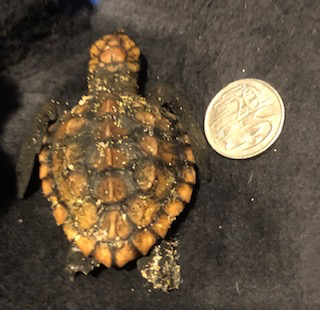
Loggi, the baby loggerhead turtle found at Tuross Head. Photo by Janet Jones. |
|
|
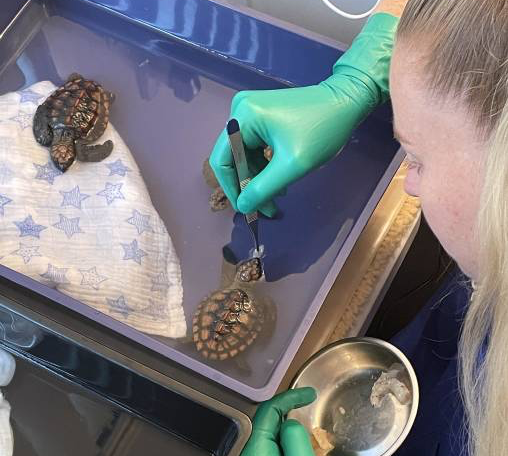
Loggerhead turtles in care. Photo by Australian Seabird Rescue. |
|
|
|
|
Loggerhead Turtles Washing Up
Last month a baby loggerhead turtle was found at One Tree beach, Tuross Head. Janet Jones says: "I contacted the Australian Seabird Rescue carer near Nowra, who already had three about the same size. She advised what immediate care and housing was required. We met at Ulladulla the next day so the turtle could have appropriate care, and be with others."
Extreme weather combined with a warm coastal current is thought to have carried these baby loggerhead turtles much further south than usual and pushed them back onshore. Hatchlings have also been found at Merimbula, Pambula, Vincentia and Currarong Beach.
Loggerhead turtles nest on beaches in Queensland until late February and then the hatchlings crawl into the ocean and swim out to sea. It is a time when they are extremely vulnerable. They are an endangered species that is important to the health of sea grass beds and reefs.
Anyone finding a baby turtle washed up on the beach should not try and put it back in the sea as it is likely to be exhausted and maybe even injured. It should be put in a box and transferred to Australian Seabird Rescue South Coast, tele: 0431 282 238
Ref: Grace Crivellaro, Extreme weather causing baby turtles to wash up on South Coast shores, Illawarra Mercury, 25 March 2021.
|
|
|
|
|
|
|
|
|
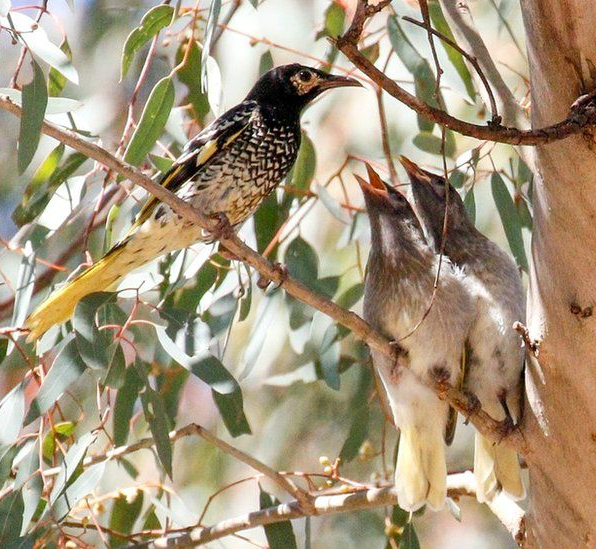
Photo: Regent honeyeater with chicks by Mick Roderick on BBC website.
|
|
|
|
|
Regent Honeyeaters Losing Song
Young regent honeyeaters learn to sing from older honeyeaters around them. However because there are fewer than 300 individuals remaining as a result of land clearing, young honeyeaters are not learning their species' song.
"In healthy populations, the song of adult male honeyeaters is complex and long. But where the population is very small, the song is diminished and, in many cases, the birds have adopted the song of other species. Sadly, this makes the males less attractive to females, which may increase the chance the regent honeyeater will become extinct."
Ref: Ross Crates et. al., Only the lonely: an endangered bird is forgetting its song as the species dies out, The Conversation, 17 March 2021.
|
|
|
|
|
|
|
|
|
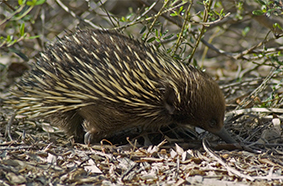
Photo: Echidna by Sharon Beder
|
|
|
|
|
Echidnas are Ecosystem Engineers
Echidnas do a lot of digging in their search for ants to eat. They dig pits, furrows and depressions and in the process bury leaves and seeds in the soil which "helps improve soil health, promotes plant growth and keeps carbon in the soil, rather than the atmosphere”.
One study found that echidnas move about seven tonnes of soil (about 8 trailer loads) every year. The pits they create help seeds to mix with water and nutrients so they are more likely to germinate.
This means the more we help echidnas, the better the health of our soils and the more we help ourselves. This can be done by ensuring fallen timber is not removed from their habitat and vegetation corridors of shrubs and ground plants are created between patches of native bush.
Ref: David John Eldridge., Dig this: a tiny echidna moves 8 trailer-loads of soil a year, helping tackle climate change, The Conversation, 5 March 2021.
|
|
|
|
|
|
|
|
|
|
Slug Can Regrow a New Body
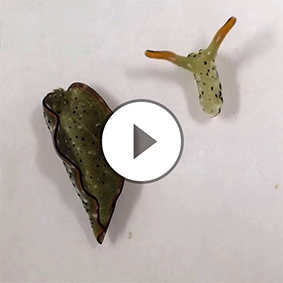
Two species of sea slug are able to detach their heads and regrow new bodies, complete with a new heart and internal organs. Researchers found that after detaching from their bodies they would start to eat and within a week they had whole new bodies.
Ref: Way to get ahead in life: The slug that can regrow its head, The New Daily, 9 March 2021.
|
|
|
|
|
|
|
|
|
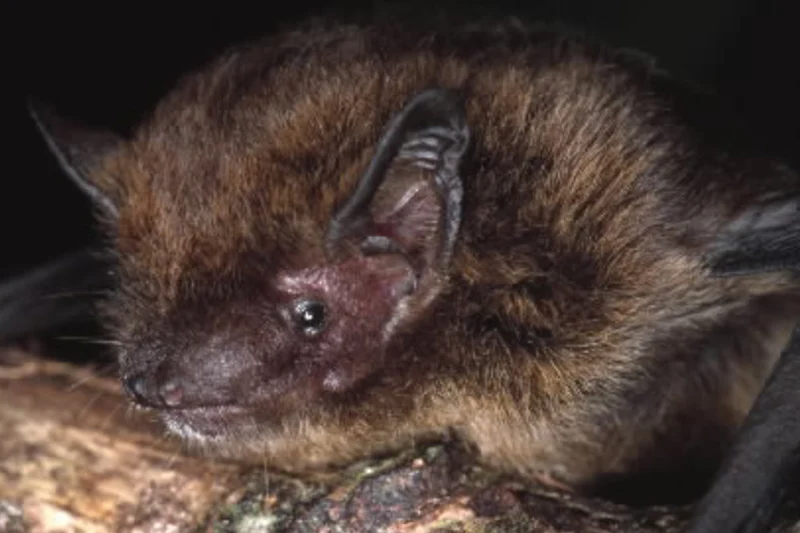
Christmas Island pipistrelle, now extinct. Photo by Lindy Lumsden in SMH. |
|
|
|
|
More Australian Species Extinct
Australia’s official list of extinct mammal species and subspecies has increased from 28 to 39. It now includes the Christmas Island pipistrelle, desert bettong, Nullarbor barred bandicoot and the Capricorn rabbit-rat. This means Australia is responsible for 38 percent of the world’s extinct mammals, a worse record than any other nation.
"University of Sydney ecologist Professor Chris Dickman said extinctions didn’t just signal the loss of a species, but reduced the ongoing viability of their native ecosystems."
Ref: Mike Foley, Australia’s share of extinct animals rises as list of the lost updated, Sydney Morning Herald, 3 March 2021.
|
|
|
|
|
|
|
|
|
|
NSW Macropod Inquiry
The NSW Legislative Council is holding an inquiry into the health and wellbeing of kangaroos and other macropods in NSW. It is being chair by Cate Faehrmann, Greens MLC. Public submissions have been called for.
The inquiry has been prompted by the dramatic fall in kangaroo and wallaroos numbers of 40 percent from 17 million in 2016 to 10.5 million in 2021.
The inquiry will consider population numbers and threats such as climate change, drought, bushfires. land clearing and fencing, culling and killing of kangaroos.
Ref: Inquiry into the health and wellbeing of kangaroos and
other macropods in New South Wales, Terms of Reference, Parliament of NSW, 15 March 2021.
|
|
|
|
|
|
|
|
|
|
Native Logging Unprofitable
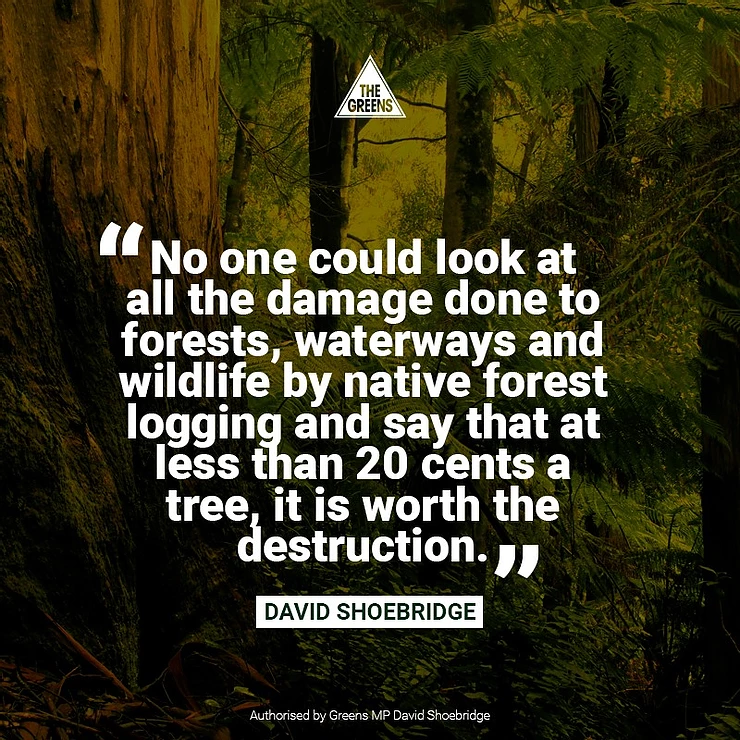
Forestry Corporation figures, obtained and analysed by the office of Greens MP David Shoebridge, show that the profits from each mature tree logged during 2019/20 averaged less than 20 cents. This is a marked decline since 2016/17 and amounts to only $28.03 per hectare, down from a peak of $225.85 in 2016/7.
|
|
|
|
|
|
|
|
Some Pics from WIRES Mid-South Coast
|
|
|
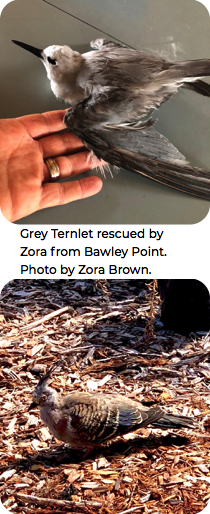
Crested pigeon raised and soft released by Emma. Photo by Emma Andrew. |
|
|
|
|
|
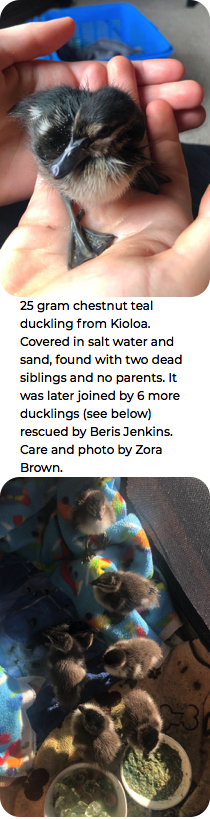
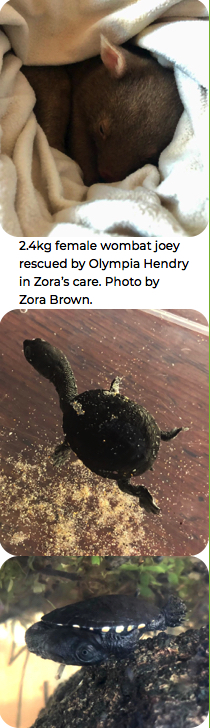
Freshly hatched 3g eastern longneck turtle found on the beach at Bawley Point and cared for by Zora, released at Zora’s place by Maryke van Merwe. Photos by Zora Brown.
|
|
|
|
|
|
|
|
|
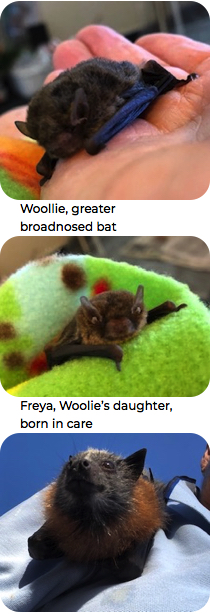
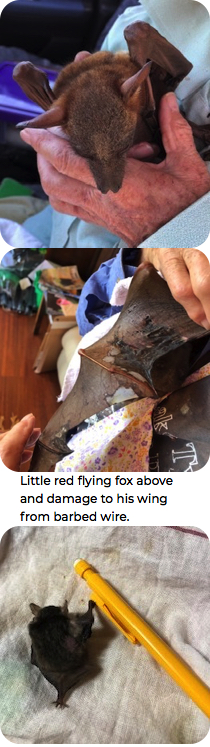
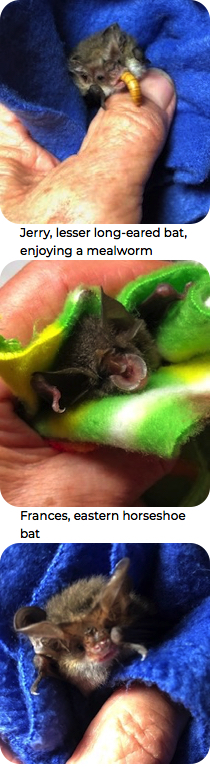
Bats in Care with Janet Jones
Photos by Janet Jones |
|
|
Wally, grey headed flying fox pup, enjoying the morning sun |
|
|
|
|
Finn, little forest bat released after dark in his territory in Tuross Head, by his rescuer and carer, Janet Jones |
|
|
|
|
Grayson, lesser long-eared bat released back in his territory in Nelligen by his rescuer, Janelle Renes |
|
|
|
|
|
|
|
|
The next WIRES General Meeting will take place on Wednesday 5th May at 6.30pm at the Ulladulla Bowling Club. Dinner will be from 5.30pm, RSVP to Shelley (shelldave71@gmail.com) by Monday 3rd May please.
|
|
|
|
|
|
|
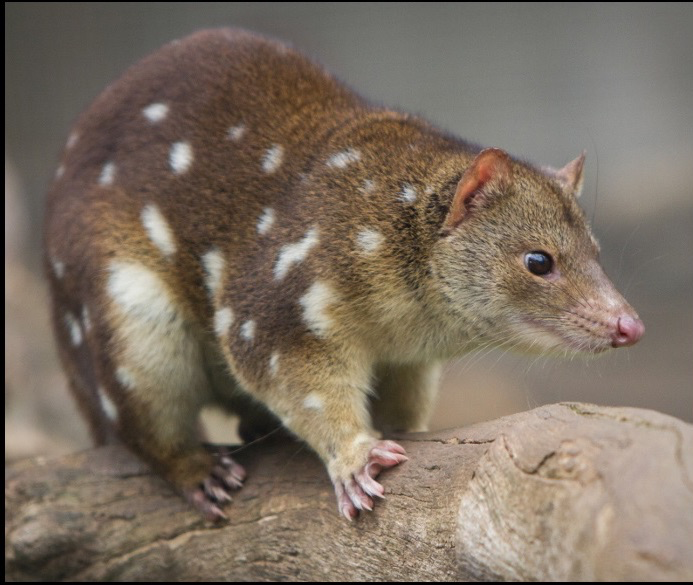
Spotted-tailed quoll, Adobe Photo Stock |
|
|
|
|
Community Wildlife Survey |
|
|
NSW Department of Planning, Industry and Environment is conducting a survey aimed at understanding the impact of the 2019/20 bushfires on native and feral animals.
They are asking for sightings of 10 target animals, including echidas, wombats, brush tail possums, eastern grey kangaroos, foxes and dingoes. The survey takes 20 to 30 minutes to complete.
Ref: Community Wildlife Survey, NSW Department of Planning, Industry and Environment, 25 January 2021.
|
|
|
|
|
|
|
|
|
- Wildlife Treatment Sheets - Possums, Echidna, Lizards, Birds, Psittacine Beak and Feather Disease, SAVEM, SA Veterinary Emergency Management.
- Critical Care of Wildlife, includes table of drug doses, by vet nurse Mimi Dona.
- Restraint and Handling Wildlife, by vet nurse Mimi Dona.
- Treating Burnt Wildlife, by vet Anne Fowler,
|
|
|
|
|
|
|
|
A new course has been launched at the Moruya TAFE aimed at creating a new generation of zoo-keepers for the area. It will provide students with the minimum qualification required to be a zookeeper and the course will include work placement at a local zoo.
"The Certificate III in Captive Animals covers units including animal welfare; capturing and restraining animals; and working in the zoo industry.
To find out more about studying captive animals at TAFE NSW, phone 13 16 01 or visit www.tafensw.edu.au."
|
|
|
|
|
|
|
|
|
from WIRES Northern Beaches Facebook page
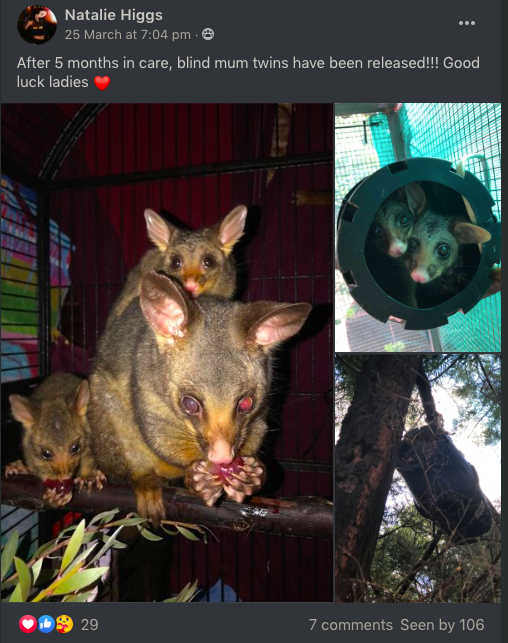
Cath Brennan, WIRES Northern Beaches, rescued a blind possum, with twins on its back, which was stuck in a pool area. The twins were successfully raised by the mother possum while in care and released back into the wild. Photo by Natalie Higgs.
|
|
|
|
|
|
|
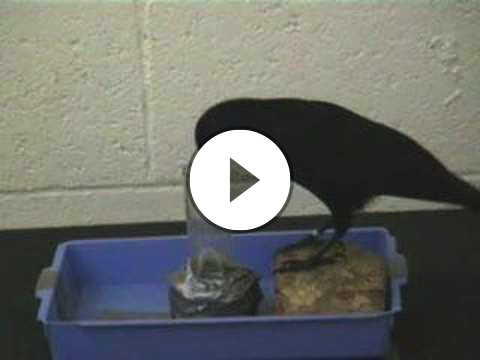
Featured YouTube: Crow Making a Tool
"A captive New Caledonian crow, observed by Weir et al. (p.
981), spontaneously and then repeatedly bent a piece of
wire into a hook for use in a task requiring a hooked tool.” Ref: ‘And in Brevia …’ Science, vol 297, 9 August 2002.
|
|
|
|
|
|
|